

Skip to content

AI pricing software solutions for consumer electronics retailers

Learn how consumer electronics retailers defend hero SKUs against competitor undercutting, time markdowns on last-gen stock before the next launch, and protect accessory and warranty margin from device discounting, with AI pricing and competitive intelligence
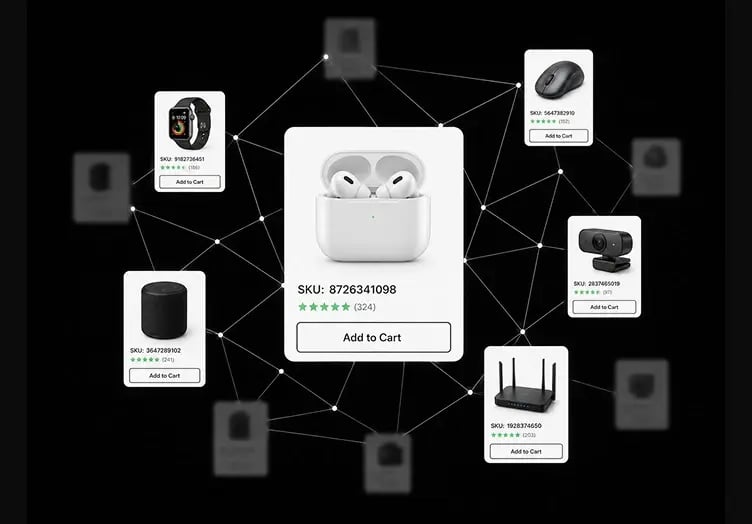
1st-Screen-image-hero-lossless
50+
retail clients worldwide
Metric 1: retail clients worldwide
6%+
minimum gross margin uplift
Metric 2: minimum gross margin uplift
100%
pilot success rate
Metric 3: pilot success rate
50%+
team time saved on repricing
Metric 4: team time saved on repricing

Trusted by 50+ organizations across the globe

Capterra
G2
Crozdesk
Speedway MotorsTSCiHerbFindelCult BeautyLOOKFANTASTICNovusStarboardFlaconiSephoraJumiaUnion CoopWilkoAUTODOCRangeLyreco

Three layers, one platform, tailored to consumer electronics retail needs

Configured around your hero SKUs, lifecycle stages, and sales channels

Product-Pillar-1-Contextual-demand model

Contextual demand model

Train a model on your own transaction history and more than 20 demand signals, so it prices to each SKU's demand elasticity and protects accessory and warranty attachment instead of optimizing the device price in isolation
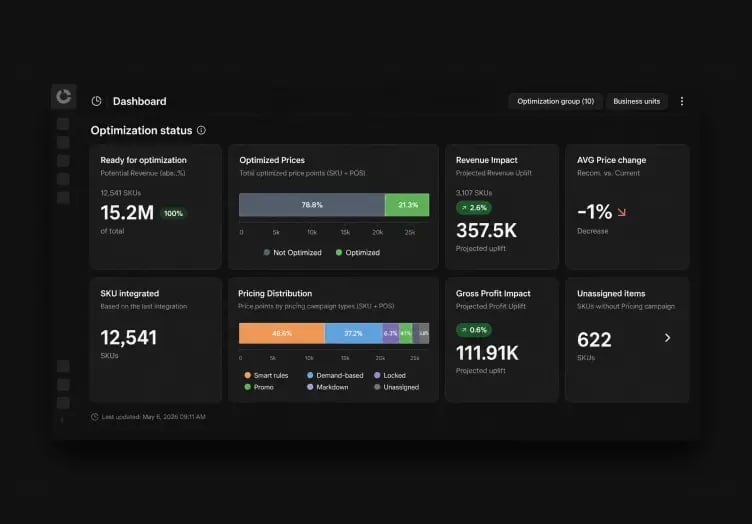
Product-Pillar-2-Tailored-pricing-system

Tailored pricing system

Combine Smart Segmentation with lifecycle stage and product-role logic, so a flagship SKU at launch, the same SKU at EOL clearance, and the accessories priced alongside it never run on the same rule
Product-Pillar-3-Purpose-built-UX-and-UI

Purpose-built UX and UI

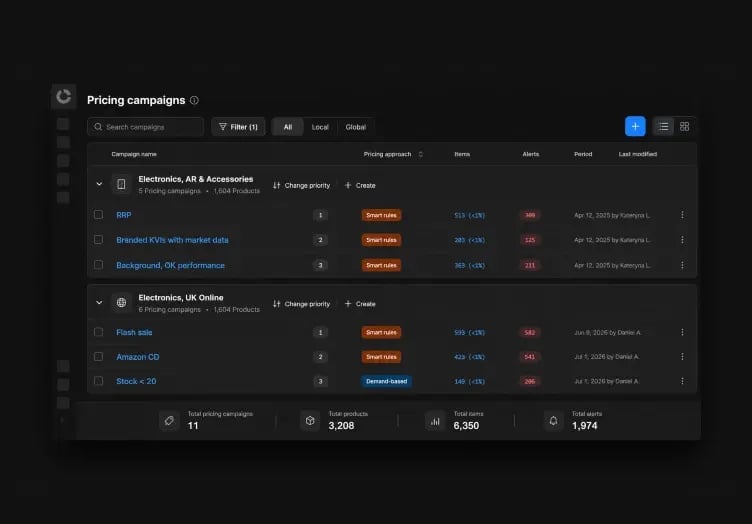
Use guided templates, one-click repricing, scenario planning, and audit tools in an interface built for retail operations teams, running at the speed daily pricing decisions actually require

AI pricing capabilities for consumer electronics retailers

See how Pricing Platform and Competitive Data work together to defend margin from launch through EOL clearance

Feature-1-AI PRICING

AI PRICING

Defend hero SKUs before competitors take the sale

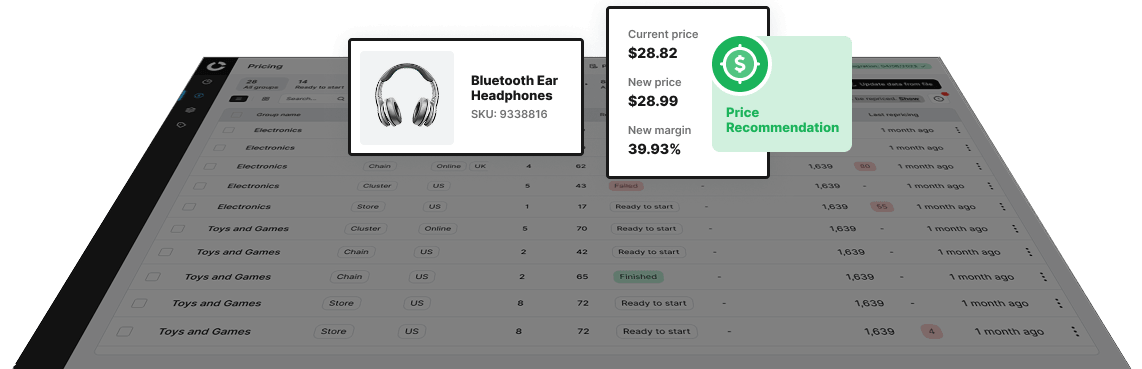
Reprice flagship TVs, phones, and laptops against verified competitor moves within the guardrails you set, so you defend share on the SKUs shoppers research hardest without matching every price down to zero margin

Feature-2-SMART SEGMENTATION

SMART SEGMENTATION

Manage flagship products on their own pricing logic

Group hero SKUs, private label, and long-tail accessories into their own optimization groups, so a researched flagship product prices for competitive defense while the rest of your assortment prices for margin.

Feature-3-LIFECYCLE PRICING

LIFECYCLE PRICIN

Price differently at launch, mid-cycle, and EOL

Run distinct pricing logic for new arrivals, current-generation stock, and outgoing models, so a just-launched device protects full margin while last-gen stock clears on a planned curve instead of a panic markdown.

Feature-4-MARKDOWN OPTIMIZATION

MARKDOWN OPTIMIZATION

Clear last-gen stock before the next launch date

Time markdown depth and timing against your own sell-through data and the next generation's expected launch window, instead of a fixed clearance calendar that either discounts too early or gets caught holding stock.

Feature-5-ANCHOR MANAGEMENT

ANCHOR MANAGEMENT

Coordinate device and accessory pricing together

Model how a discount on a flagship device shifts demand for the warranties, cases, and accessories sold alongside it, so a promo that drives units doesn't quietly erode the attachment margin that funds it.

Feature-6-WHAT-IF SIMULATION

WHAT-IF SIMULATION

Test competitive moves before you react to them

Simulate a competitor's price cut, a markdown wave, or a promo depth change against your real portfolio data before it goes live, so you know the revenue and margin impact before committing.

Feature-7-COMPETITIVE INTELLIGENCE

COMPETITIVE INTELLIGENCE

Know which competitor price actually reflects the market

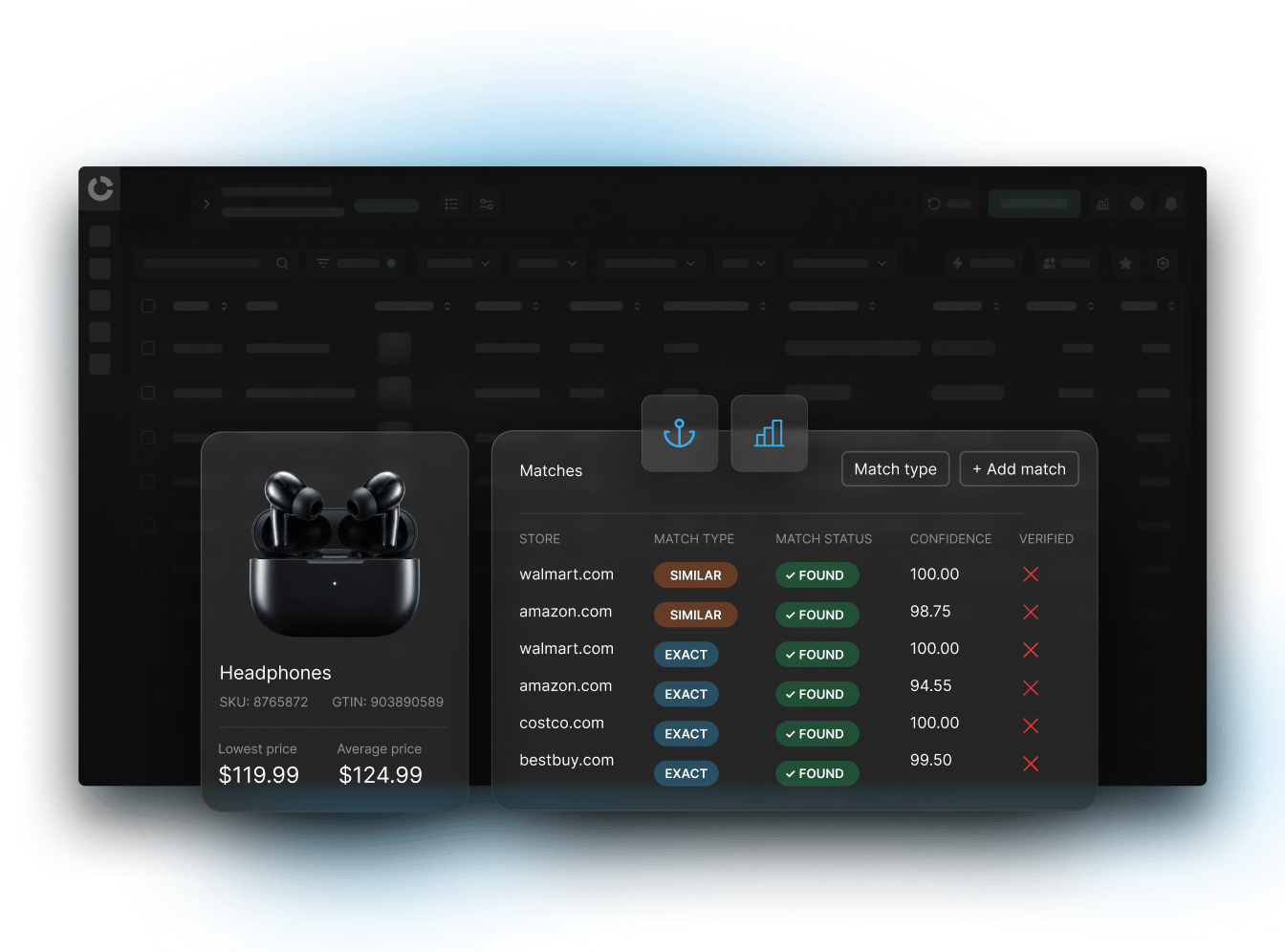
Track competitor and marketplace prices, promotions, and stock status matched to your own SKUs at the GTIN level, so a below-market price is confirmed as a genuine competitive move, not a stockout or a pricing error.

Feature-8-MAP COMPLIANCE

MAP COMPLIANCE

Stay compliant while a below-MAP price sits in the market

Monitor your advertised price across every channel and flag competitor prices below MAP, so you hold your position with confidence instead of matching a price that risks your own compliance

Balance competitive and value-based pricing strategies with Competera AI

Wherever your pricing is today, we meet you there

Start with what you have. Add intelligence when you're ready.
One architecture carries every stage forward, so upgrading is never a rip-and-replace.

Rule-based pricing systems

Rule-based pricing systems

Add market awareness before you overhaul how you price

See what competitors are actually charging on your hero SKUs and how fast they're moving before committing to a bigger pricing shift, so your first move off manual price-matching is grounded in real market data instead of a spot check.

Rule-based pricing support

Rule-based pricing support

Move off spreadsheets without ripping out what already works

Bring flagship SKUs, accessories, and last-gen clearance stock into one system using rule-based tactics like Cost+ and Competitive Driven, so your team stops updating prices manually across spreadsheets while keeping the pricing logic it already trusts.

Elasticity-based pricing

Elasticity-based pricing

Give your existing price rules the context they're missing

Layer current competitor and marketplace price, promo, and stock data onto your existing rules, so a Competitive Driven tactic on a hero SKU reacts to what's actually happening in the market within hours, not the days a manual review takes

Machine-learning adjusted pricing

Machine-learning adjusted pricing

Deploy demand modeling across every store cluster and product role

Move to full AI-contextual optimization, trained on your own transaction history, with cross-elasticity and lifecycle logic built for electronics' compressed launch-to-EOL cycles and device-accessory attachment effects.

Predictive scenario modeling

Predictive scenario modeling

Lay the groundwork for pricing personalized by segment

Extend pricing logic to loyalty tiers and channel segments, so members and marketplace shoppers see coordinated offers on devices and accessories without undermining the base price everyone else sees, all managed within one architecture

Upgrading is an activation, not a migration

Wherever you start, your data, configuration, and team knowledge carry forward

Pricing use cases for consumer electronics retailers

Real-world scenarios consumer electronics retailers face every week, and how AI pricing solves them

COMPETITIVE KVI DEFENSE

Defend price position on the products shoppers research hardest

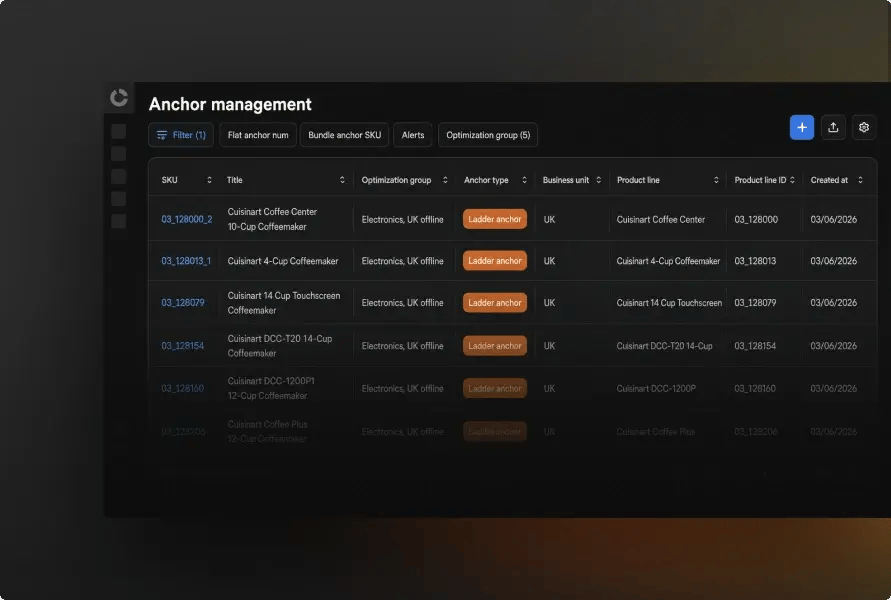
Price wars on flagship TVs, phones, and laptops erode margin within days of launch, as competitors undercut within hours. Matching every move blindly trades margin for share you don't need to buy. See how competitive tracking and guardrail-based repricing defend hero SKUs without matching every price down
Use-case-1-COMPETITIVE-KVI-DEFENSE

LIFECYCLE MARKDOWN OPTIMIZATION

Time markdowns before the next generation arrives

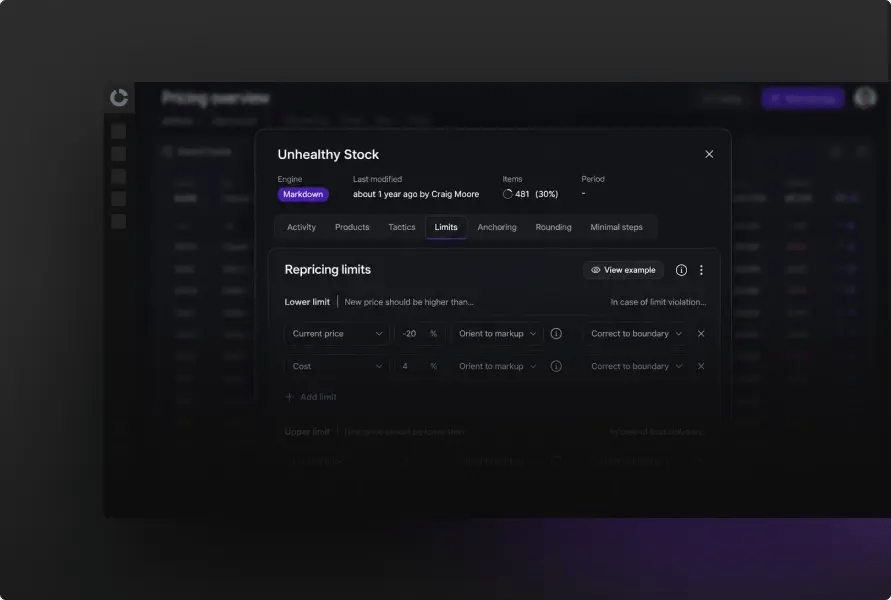
Learn how consumer electronics retailers time markdown depth and timing on last-gen and EOL stock against real sell-through data, clearing shelves before the next launch instead of a fixed clearance calendar that runs too early or too late
Use-case-2-LIFECYCLE-MARKDOWN-OPTIMIZATION

CROSS-CATEGORY MARGIN

Protect accessory margin when device prices move

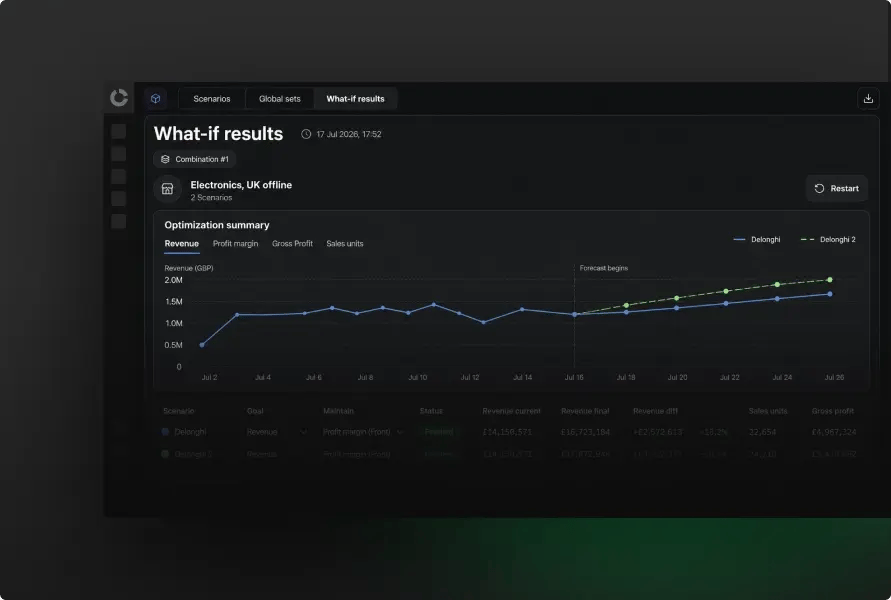
Deep discounts on flagship devices routinely cannibalize the warranties and accessories sold alongside them, with attachment rates declining even as unit sales hold steady. The real cost of a device promo shows up elsewhere. See how cross-elasticity modeling coordinates device and accessory pricing so promos don't erode attachment margin

Use-case-3-CROSS-CATEGORY-MARGIN

Results consumer electronics retailers can measure

Measurable impact consumer electronics retailers get from Competera’s Pricing Platform and Competitive Data

95%+
forecast accuracy across 20+ demand factors, powered by Pricing Platform's Contextual AI
Metric 1: forecast accuracy across 20+ demand factors, powered by Pricing Platform's Contextual AI
+4-8%
gross margin improvement in year one with Competera Pricing Platform optimization
Metric 2: gross margin improvement in year one with Competera Pricing Platform optimization
98%
average data delivery SLA from Competitive Data by Competera
Metric 3: average data delivery SLA from Competitive Data by Competera
Best Solution 2024
2023 Best Breakthrough Technology Solution by Vendors in Partnerships Awards
Best Retail 2023
2024 Best Retail Insights by Vendors in Partnerships Awards
Inc. 5000
2025 Honoree of the Inc. 5000 List of Fastest-Growing Companies in America
Gartner
Representative Vendor in 2024 Market Guide for Retail Pricing & Markdown Optimization

See what real-time competitive pricing could protect across your device and accessory portfolio

bottom-cta-visuals

FAQ

01

What makes consumer electronics pricing different from other retail categories?

Consumer electronics runs on compressed product cycles measured in months rather than years, so margin doesn't decline gradually, it drops sharply the moment a competitor or the manufacturer announces the next generation. Competera's Lifecycle Pricing applies distinct logic to new arrivals, current-generation stock, and outgoing models within one system. This replaces the calendar-based markdown timing most electronics retailers still rely on with pricing tied to actual sell-through and launch timing.

02

How do consumer electronics retailers protect margin on hero SKUs without losing the sale?

Hero SKUs like flagship TVs, phones, and laptops are the products shoppers research and price-compare hardest, which makes them the most competitive and the most margin-sensitive items in the assortment. Competera's Smart Segmentation manages these SKUs separately from the rest of the portfolio, using AI Pricing and Competitive Data together to reprice within guardrails a pricing team sets as competitors move. This defends share on the SKUs that matter without matching every price drop down to zero margin.
03

Can Competera time markdowns before the next product generation launches?

Yes. Competera's Markdown module models sell-through against your own transaction data and calculates optimal discount depth and timing for last-gen and end-of-life stock, instead of applying a fixed clearance calendar. Retailers use this to clear outgoing models ahead of a new launch date without discounting too early and giving away margin, or too late and getting stuck holding unsold inventory.
04

How does Competera coordinate pricing between devices and their accessories?

Competera's demand modeling captures cross-elasticity, measuring how a price change on a device affects demand for the warranties, cases, and accessories sold alongside it. Anchor Management and optimization groups keep these relationships coordinated, so a discount that drives device units doesn't quietly cannibalize the accessory and warranty margin that funds the category. This is especially relevant for consumer electronics, where attachment revenue is a significant share of category profit.
05

Does Competera help retailers stay compliant with brand MAP policies?

Yes. Competera's Competitive Data monitors your own advertised price across channels and flags when a competitor's price falls below a brand's Minimum Advertised Price (MAP) floor, so you can confirm a genuine violation before reacting to it. Pricing Platform lets you set MAP values as hard floors inside your repricing logic, so no AI-driven recommendation breaches a brand's policy. This protects your own compliance and lets you hold your position with confidence instead of matching a price that shouldn't be in the market.
06

How fast can pricing react to a competitor's price change?

Competera's Competitive Data tracks competitor and marketplace price, promotion, and stock changes in near real time, with changes timestamped to the minute. Pricing Platform's AI Pricing and Smart Rules tactics use this data to recommend or automatically apply repriced values within the guardrails a pricing team sets. For hero SKUs where competitors can move in hours, this closes the gap between a market move and a retailer's response, instead of the days a manual review typically takes.
07

What results do consumer electronics retailers see with Competera?

Competera's Pricing Platform delivers 95%+ forecast accuracy across 20+ demand factors and an average gross margin improvement of 4-8% in year one, driven by demand-based optimization instead of reactive price-matching. Competitive Data separately delivers a 98% average data delivery SLA, giving pricing teams a reliable, real-time view of the competitive market they're pricing against. These figures reflect the two products working together but are measured and reported separately.
08

How does Competitive Data's price tracking work for consumer electronics?

Competitive Data matches your SKUs to competitor listings at the GTIN level, tracking exact and similar matches across tracked retailers and marketplaces with confidence scores and human verification on top of AI automation. For consumer electronics, this coverage extends to marketplace sellers and price comparison feeds, where gray-market and unauthorized listings are most likely to appear. Retailers get price, promotion, and stock context together, delivered at a 98% average SLA across 34 markets.
09

How long does it take to implement Competera for a consumer electronics retailer?

Competitive Data reaches time-to-value in about 2 weeks, with a dedicated adoption team handling scanning setup and match verification for your assortment. Pricing Platform deployment builds on that same data foundation, using templates and self-service optimization group creation to bring hero SKUs, accessories, and lifecycle-stage pricing online without a lengthy rollout. Most teams start with a subset of hero SKUs before expanding to the full portfolio.