





50+
retail clients worldwide
Metric 1: retail clients worldwideLearn how grocery retailers protect price perception through disciplined KVI pricing, run profitable promo campaigns, and time perishable markdowns before they turn into losses, with AI pricing and competitive intelligence
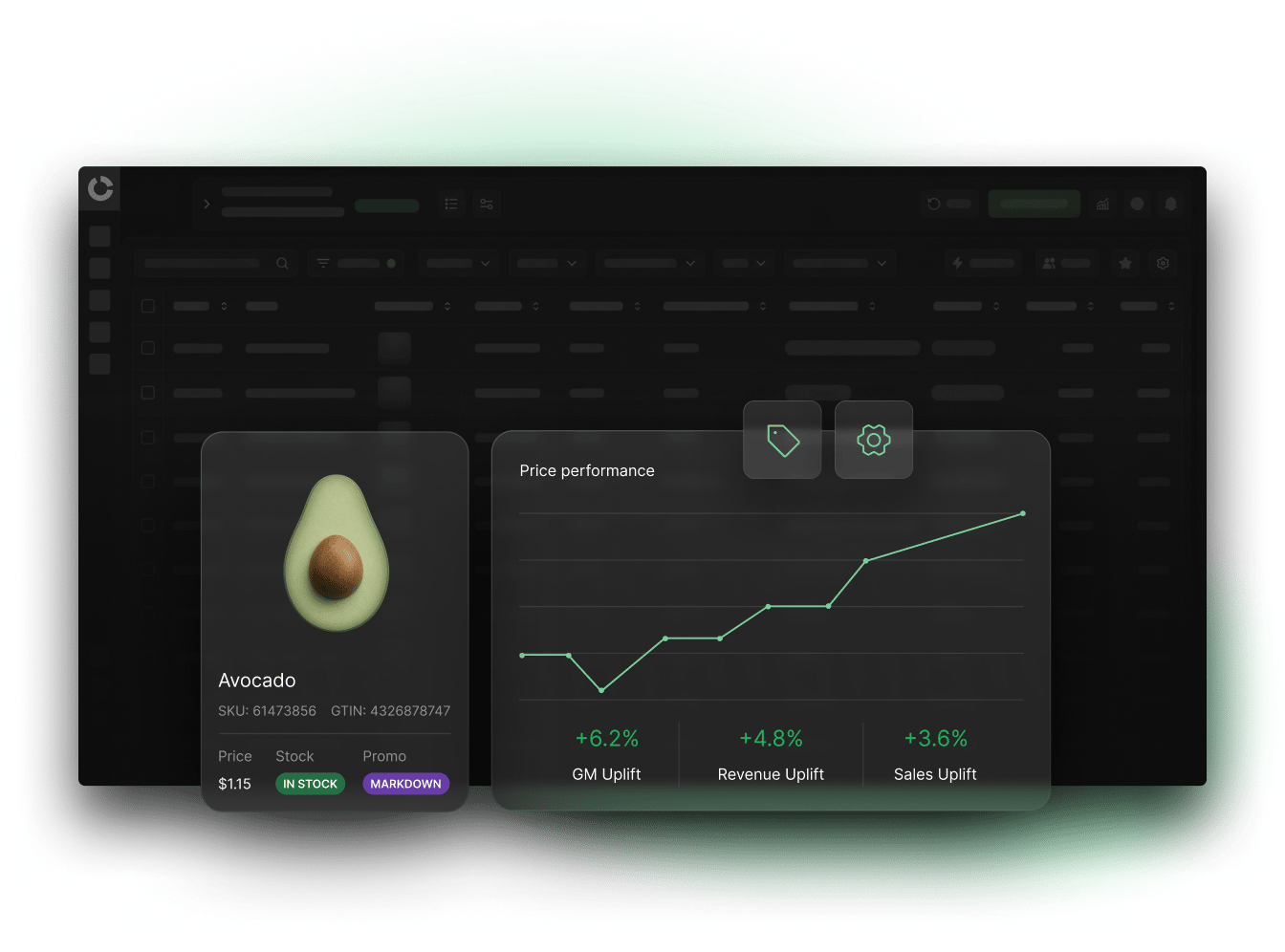











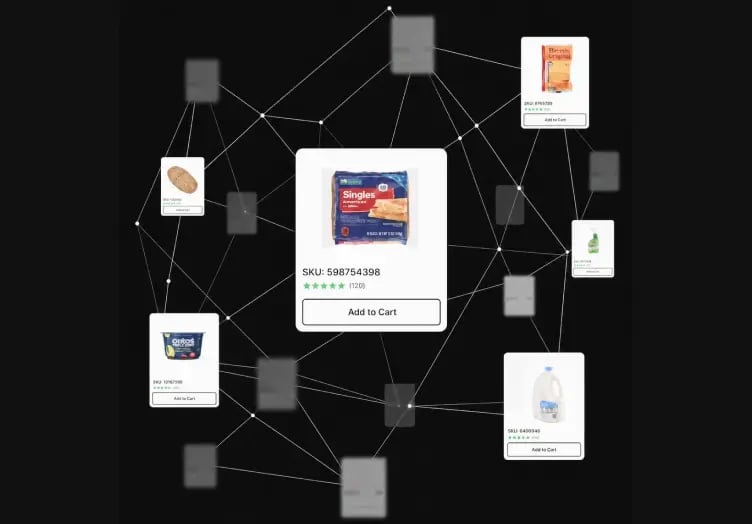
Train a model on your own transaction history and more than 20 demand signals, so it prices to each item's demand elasticity and protects basket value instead of optimizing one SKU at a time
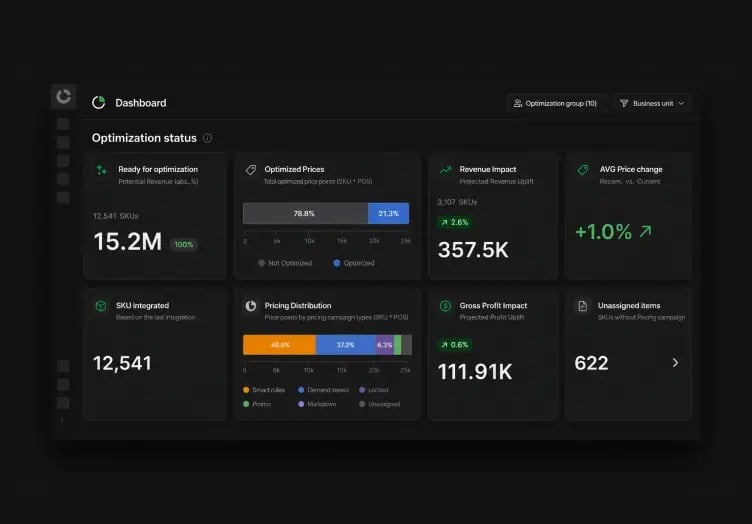
Combine smart segmentation with store-cluster and product-role logic, so a KVI in a discount-format store and a basket builder in a premium store are never priced by the same rule
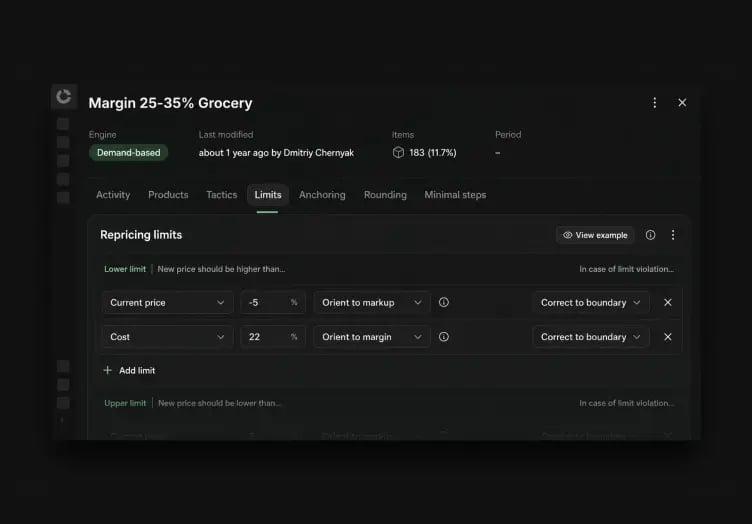
Use guided templates, one-click repricing, scenario planning, and audit tools in an interface built for retail operations teams, running at the speed daily pricing decisions actually require

KVI MANAGEMENT
Manage anchor items separately from the rest of your portfolio, so KVI pricing stays sharp while the rest of your assortment prices to its own role, whether that's building margin, driving traffic, or growing basket size

PORTFOLIO SEGMENTATION
Split basket builders, traffic generators, and markdown-bound perishables into their own optimization groups, so each runs on its own pricing logic

PROMO OPTIMIZATION
Test every promotion, ad feature, TPR, or trade-funded deal, against a real incremental-lift baseline before it runs, so you can see which discounts grow volume and which just give away margin

PRICING SCENARIOS
Run What-if scenarios to see how a price change on any product or product group plays out in revenue, margin, and volume across your store clusters

PRICE LOCALIZATION
Plan and run time-bound campaigns for seasonal produce, regional promotions, or a sudden move by a discounter nearby, so each store cluster responds to its own market instead of following a single national price

MARKDOWN OPTIMIZATION
Use predictive modeling that calculates the optimal discount depth and timing. Set a sales target, by volume or percentage of stock, and let the engine build the markdown wave for you

OMNICHANNEL PRICING
Adjust pricing to each store's local market and competitive landscape with store-cluster segmentation, while keeping price, promo, and markdown strategy consistent across every channel

COMPETITIVE INTELLIGENCE
Monitor competitor prices, promotions, and stock status matched to your own SKUs at 95%+ accuracy, so every pricing decision starts from a current, verified view of the market

Rule-based pricing systems
See what competitors are actually charging on your key categories before committing to a bigger pricing shift, so your first move off cost-plus is grounded in the market

Rule-based pricing support
Automate competitive intelligence and rule-based execution across your full grocery assortment in weeks, so KVIs get consistent logic even before you have the historical data an AI model needs

Elasticity-based pricing
Keep the rule logic your team already trusts, and layer in demand context so a rule firing on a KVI and a rule firing on a slow-moving long-tail item stop getting treated the same way

Machine-learning adjusted pricing
Move to full AI-contextual optimization, trained on your own transaction history, with cross-elasticity and store-cluster logic built for grocery's most complex categories

Predictive scenario modeling
Extend the same AI-centric architecture already running your store-cluster and portfolio segmentation into the foundation personalized offers are built on
PROMO MANAGEMENT
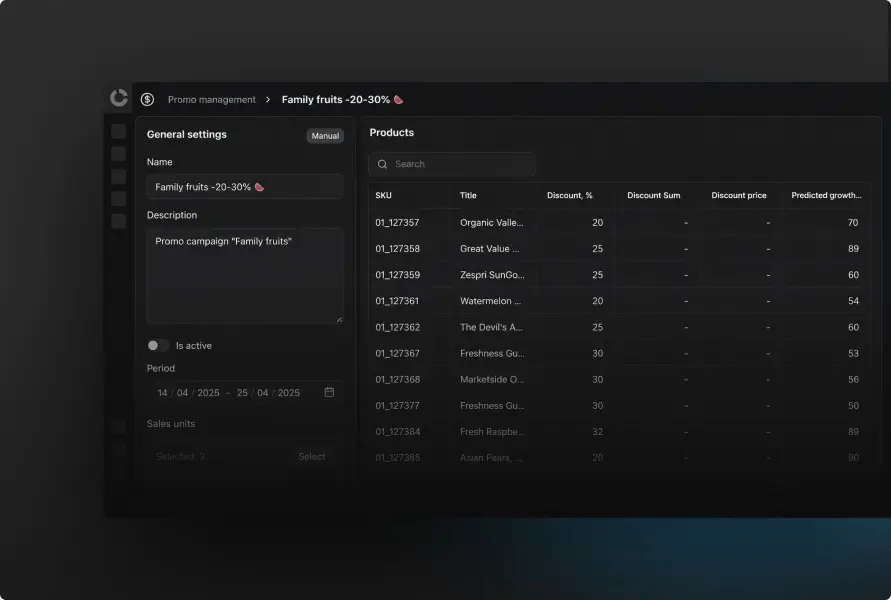
Blanket promotions and markdowns typically cost grocery retailers 3-5% of margin a year. The real test of a promotion is whether it earns back what it costs. See how demand-aware promo optimization identifies which promotions drive real incremental volume and which just discount sales that would have happened anyway
KVI PRICING
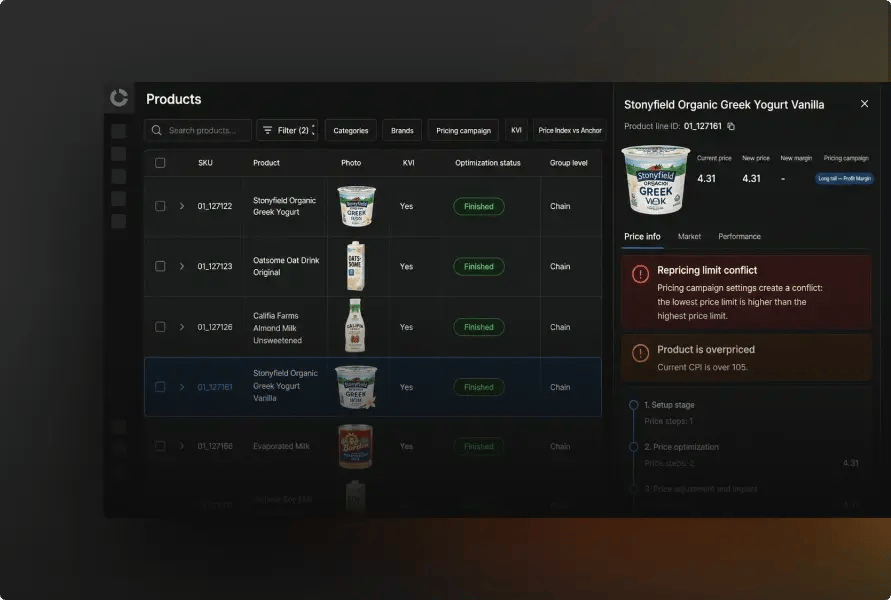
KVI lists grow over time and rarely get re-tested. Some items still tagged as KVIs no longer perform like ones, and that mismatch quietly costs margin. Protect price perception and margins with Smart Segmentation, which continuously re-tests your KVI list against real shopper behavior
STORE-LEVEL PRICING
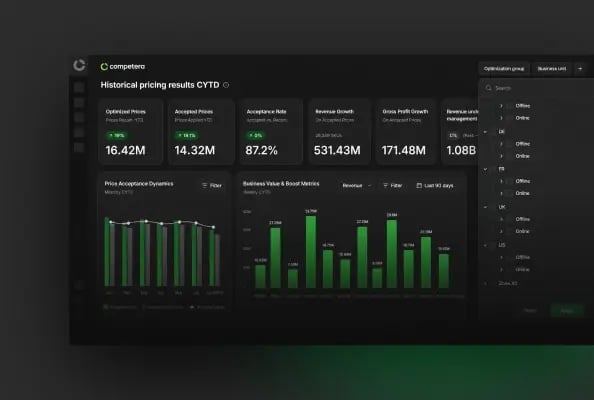
A discount-format store and a premium-format store rarely compete for the same shopper. Pricing your assortment the same way in both drains margin and ruins price perception. Run store-cluster segmentation to price and position products to each cluster's own local market and competition

This case study examines how NOVUS, a major Ukrainian supermarket chain, partnered with Competera to implement an advanced pricing automation solution.
Grocery
Learn how an Eastern European supermarket chain implemented Competera's AI pricing platform to overcome cross-elasticity challenges and increase profits by 7% in 8 weeks. Explore our detailed case study for insights into successful implementation.
Grocery


Most grocery pricing teams are sitting on margin they can't see, locked up in promotions that don't pay for themselves and KVIs priced on instinct instead of elasticity. Book a demo and we'll walk through what that looks like against your own categories
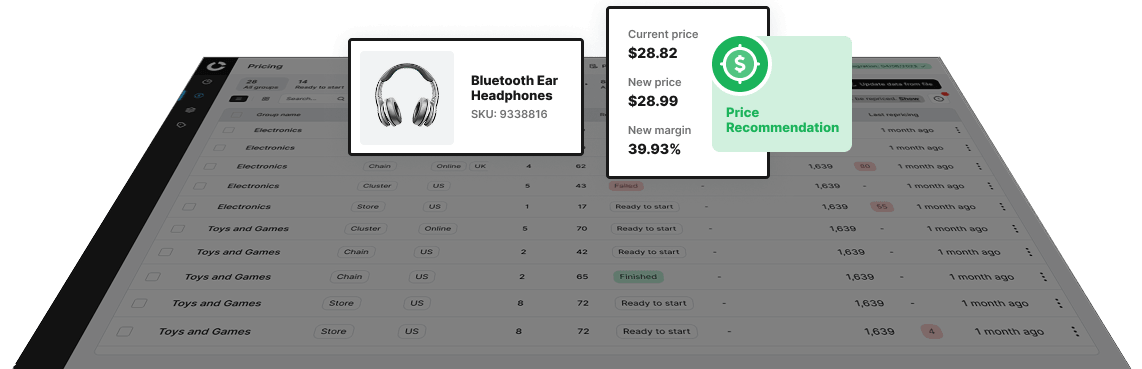
Retail competitive intelligence helps pricing teams move from data collection to strategic decisions. Here's how enterprise retailers apply it effectively.
Markdown optimization uses AI to find the right time and depth to reduce prices — so retailers clear inventory faster while protecting margin.

Repeat recognition on the ranking of America's fastest-growing private companies points to steady, compounding demand for retail pricing AI
Explore the key aspects of the basing point pricing system and get to know more about the role of the base price in the business
Bringing decades of experience to simplify the transition from legacy systems to agile, AI-driven pricing excellence
Read about the choke price phenomenon while exploring its key constituents


Trusted by 50+ organizations across the globe