


Skip to content

AI pricing software solutions for health and beauty retailers

Learn how health and beauty retailers protect MAP compliance across hundreds of brands, catch marketplace price erosion from unauthorized sellers before it spreads across channels, and cut hours of manual price review every week with Competera
parfum_price_history_lossless
50+
retail clients worldwide
Metric 1: retail clients worldwide
6%+
minimum gross margin uplift
Metric 2: minimum gross margin uplift
100%
pilot success rate
Metric 3: pilot success rate
50%+
team time saved on repricing
Metric 4: team time saved on repricing

Trusted by 50+ organizations across the globe

Capterra
G2
Crozdesk
Speedway MotorsTSCiHerbFindelCult BeautyLOOKFANTASTICNovusStarboardFlaconiSephoraJumiaUnion CoopWilkoAUTODOCRangeLyreco

Three layers, one platform, tailored to grocery pricing needs

Configured around your KVIs, store clusters, and promotion calendar

Product-Pillar-1-Contextual-demand-model(4)

Contextual demand model

Train a model on your own transaction history and more than 20 demand signals, so it prices to each product's demand elasticity and protects cross-sell attachment across your assortment

Product-Pillar-2-Tailored-pricing-system(4)

Tailored pricing system

Combine market and channel clusters, grow-or-maintain goals, and product relationship management into one system, so each SKU is priced according to its role and brand tier

Product-Pillar-3-Purpose-built-UX-and-UI(4)

Purpose-built UX and UI

Use guided templates, one-click repricing, scenario planning, and audit tools in an interface built for retail operations teams, running at the speed daily pricing decisions actually require

Pricing capabilities for health and beauty retail teams

See how Pricing Platform and Competitive Data work together to solve health and beauty's toughest pricing challenges, from MAP compliance to multi-market consistency

Feature-1-AI-PRICING

AI PRICING

Accelerate repricing cycles without losing precision

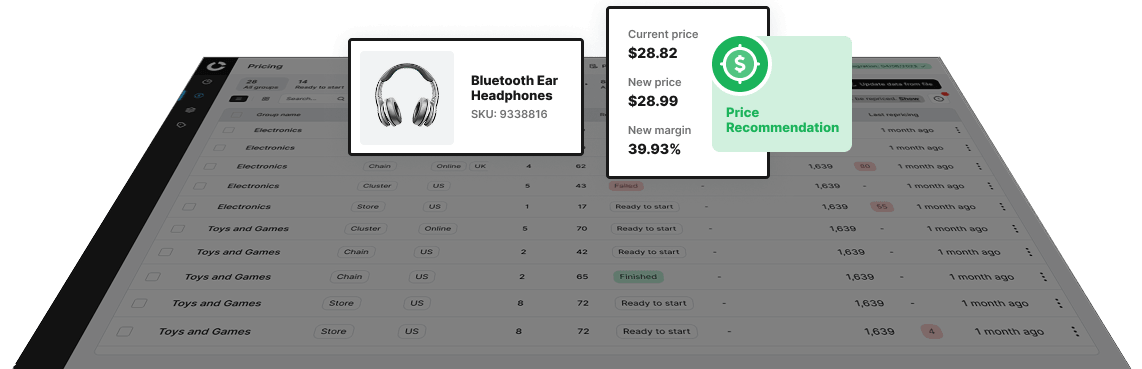
Run demand-driven pricing campaigns that generate daily price recommendations across your full assortment, trained on your own transaction data and more than 20 demand signals

Feature-2-SMART-SEGMENTATION

SMART SEGMENTATION

Protect SKUs that shape your price perception

Classify hero products, brand anchors, and long-tail SKUs automatically, so each segment prices to its own commercial role instead of sharing one rule

Feature-3-PROMO-MANAGEMENT

PROMO MANAGEMENT

Run profitable promotions on the right timeline

Plan and model promotional campaigns inside the same system as regular pricing, so every offer's revenue and margin impact is known before it goes live

Feature-4-MARKDOWN-OPTIMIZATION

MARKDOWN OPTIMIZATION

Clear slow-moving stock without guesswork

Time and size markdowns for end-of-life, seasonal, or slow-moving stock using predictive modeling instead of a fixed discount calendar

Feature-5-WHAT-IF-SIMULATIONS

WHAT-IF SIMULATIONS

Preview revenue and margin impact before you commit

Test any pricing, promotion, or markdown scenario against your real portfolio data and see predicted revenue and margin impact in minutes, with 95%+ forecast accuracy

Feature-6-COMPETITIVE-INTELLIGENCE

COMPETITIVE INTELLIGENCE

Price against a current, context-aware view of the market

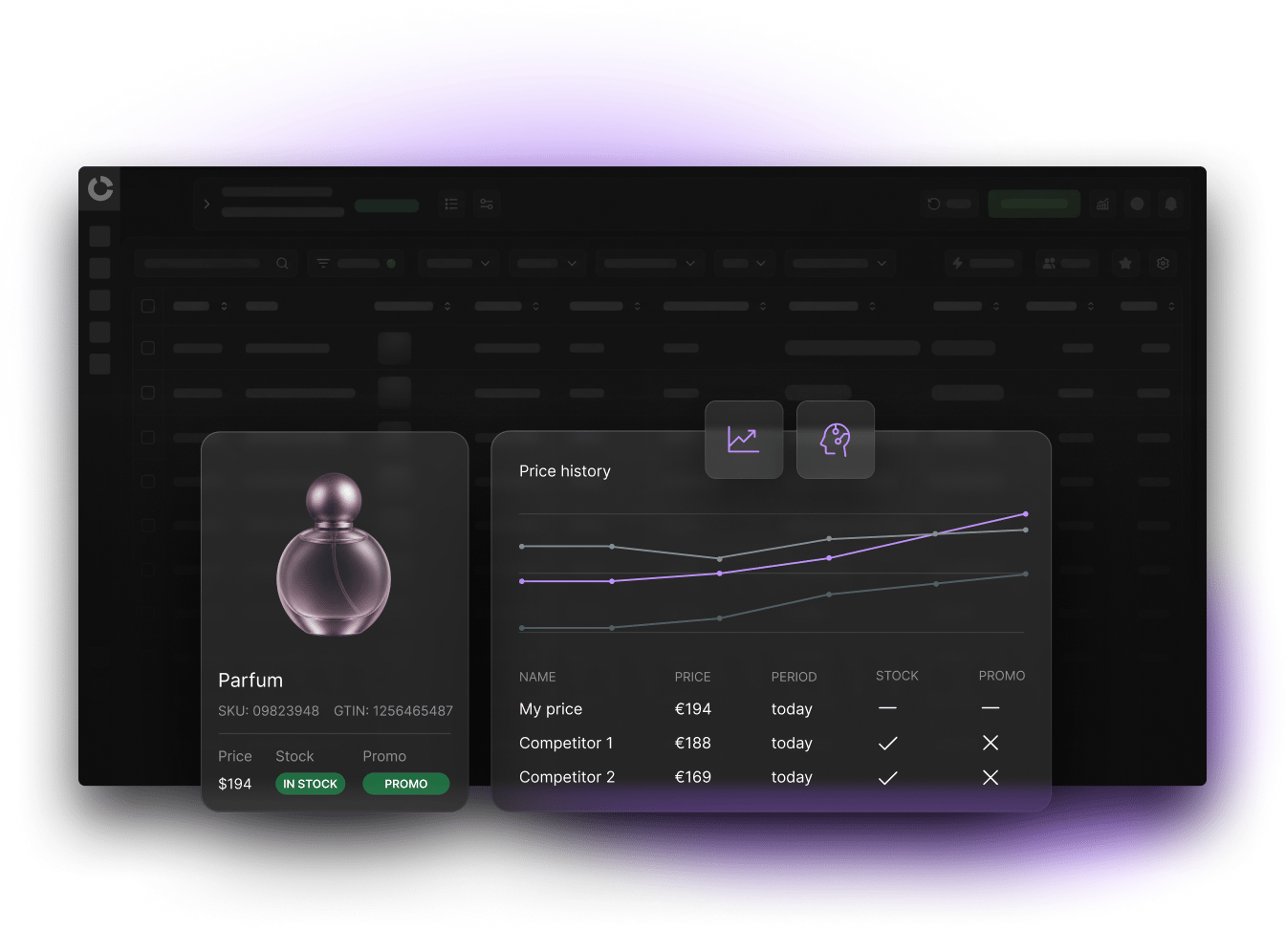
Track competitor and marketplace prices, promotions, and stock status matched accurately to your own SKUs, so every pricing decision comes with the context behind it

Wherever your pricing is today, we meet you there

Start with what you have. Add intelligence when you're ready.
One architecture carries every stage forward, so upgrading is never a rip-and-replace.

Rule-based pricing systems

Rule-based pricing systems

Add market awareness before you overhaul how you price

See what competitors and marketplace sellers are actually charging across your brand tiers before committing to a bigger pricing shift, so your first move off cost-plus is grounded in the market

Rule-based pricing support

Rule-based pricing support

Move off spreadsheets without ripping out what already works

Automate competitive intelligence and rule-based execution across your full assortment quickly, so brand-authorized items get consistent, MAP-compliant logic while you build the transaction history an AI model needs

Elasticity-based pricing

Elasticity-based pricing

Give your existing price rules the context they're missing

Keep the rule logic your team already trusts, and layer in demand context so a rule firing on a hero product and a rule firing on a slow-moving long-tail item stop getting treated the same way

Machine-learning adjusted pricing

Machine-learning adjusted pricing

Deploy demand modeling across every store cluster and product role

Move to full AI-contextual optimization, trained on your own transaction history, with cross-elasticity and market-cluster logic built for health and beauty's brand-tier and multi-country complexity

Predictive scenario modeling

Predictive scenario modeling

Lay the groundwork for pricing personalized by segment

Extend the same AI-centric architecture already running your market-cluster and portfolio segmentation into the foundation personalized offers are built on.

Upgrading is an activation, not a migration

Wherever you start, your data, configuration, and team knowledge carry forward

Pricing use cases for health and beauty retailers

Real-world scenarios health and beauty retailers face every day and how AI pricing solves them

PROMO MANAGEMENT

Grow average basket value with demand-aware pricing across brand tiers

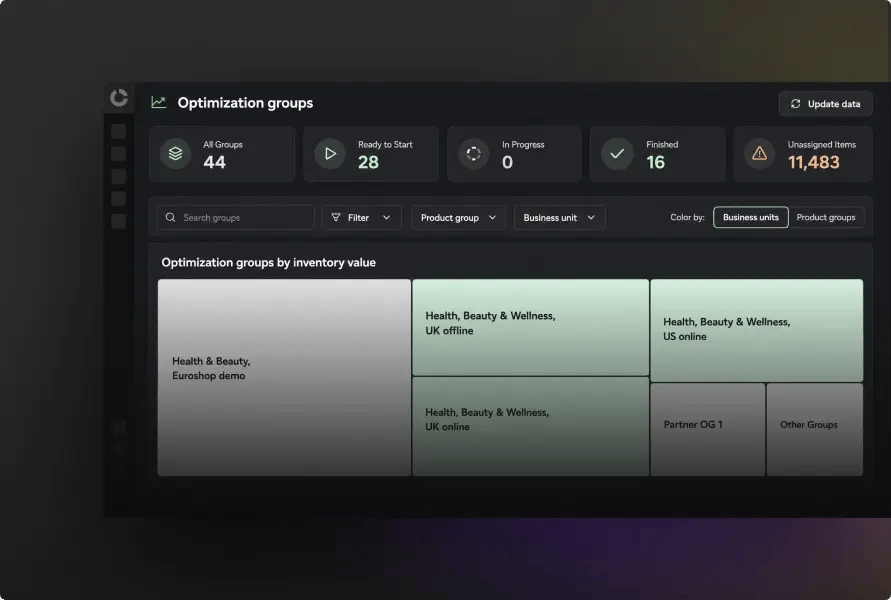
Use demand elasticity modeling to coordinate prices across prestige, premium, and everyday product lines, so that a price move on one item lifts the performance of related products in the basket
Use-case-1-Promotion-and-markdown

LIFECYCLE PRICING

Optimize pricing at every product lifecycle stage, from launch to clearance

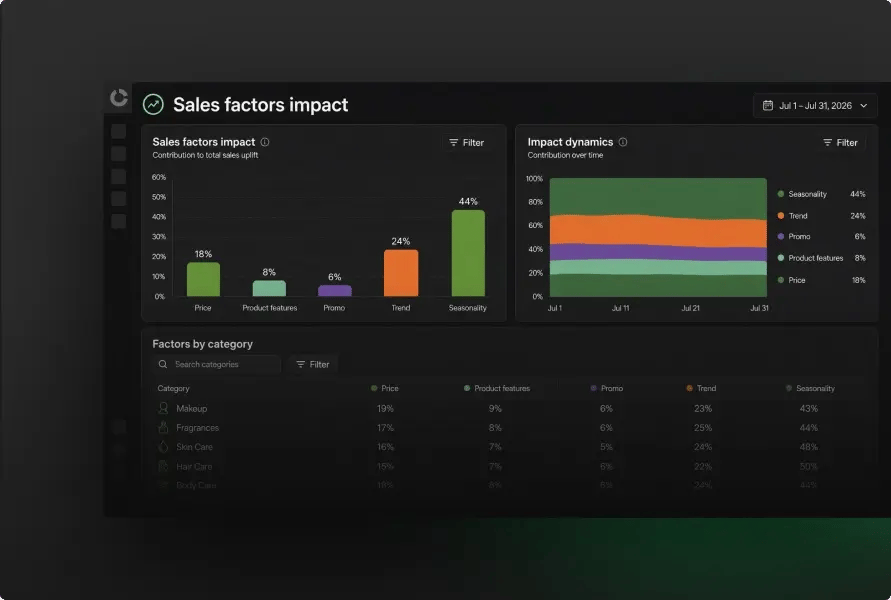
Apply distinct pricing logic to new arrivals, core assortment, and end-of-life products, capturing full demand value at launch and hitting sell-through targets at clearance while protecting margin throughout
Use-case-2-LIFECYCLE-PRICING

COMPETITIVE INTELLIGENCE

Track competitor prices across every channel and market

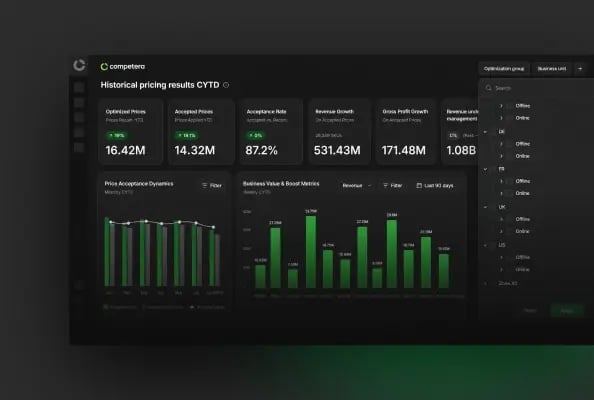
Monitor pricing, promotions, and stock availability across specialty stores, pharmacies, marketplaces, and brand D2C sites, with AI-augmented product matching that delivers 95%+ accuracy across the full assortment

Use-case-3-Regional-store-level-price-and-positioning

Results health and beauty retailers can measure

Measurable impact health and beauty retailers get from Competera’s Pricing Platform and Competitive Data

95%+
forecast accuracy across 20+ demand factors, powered by Pricing Platform's Contextual AI
Metric 1: forecast accuracy across 20+ demand factors, powered by Pricing Platform's Contextual AI
+4-8%
gross margin improvement in year one with Competera Pricing Platform optimization
Metric 2: gross margin improvement in year one with Competera Pricing Platform optimization
98%
average data delivery SLA from Competitive Data by Competera
Metric 3: average data delivery SLA from Competitive Data by Competera
Best Solution 2024
2023 Best Breakthrough Technology Solution by Vendors in Partnerships Awards
Best Retail 2023
2024 Best Retail Insights by Vendors in Partnerships Awards
Inc. 5000
2025 Honoree of the Inc. 5000 List of Fastest-Growing Companies in America
Gartner
Representative Vendor in 2024 Market Guide for Retail Pricing & Markdown Optimization

See what competitive visibility and demand-aware pricing could unlock across your assortment

Most health and beauty pricing teams spend hours on manual price reviews across fragmented channels while basket value and margin slip through gaps they can't measure. Book a demo and we'll show you what coordinated, demand-based pricing looks like against your own brand tiers and markets
bottom-cta-visuals

FAQ

01

What is AI pricing for health and beauty retail?

AI pricing for health and beauty retail uses demand elasticity modeling, competitive intelligence, and cross-product analysis to set and optimize prices across a retailer's full assortment. Competera's Pricing Platform analyzes 20+ demand factors to generate daily price recommendations that account for how products in the basket influence each other. The result is portfolio-level optimization that balances revenue growth and margin protection, with human-in-the-loop controls so pricing teams approve every recommendation before it goes live.

02

How does competitive data work for health and beauty retailers?

Competitive Data by Competera tracks competitor prices, promotions, stock availability, and MAP compliance across specialty retailers, pharmacy chains, department stores, Amazon, and brand D2C sites. AI-augmented product matching maps SKUs to competitor listings with 95%+ matching quality, including private label and unbranded items without standard identifiers. Pricing teams get a structured dashboard with price index, competitive gaps, and promotional context, refreshed on the scanning schedule they configure.

03

Can Competera handle multi-country pricing for beauty retailers operating across markets?

Yes. Competera supports multi-country optimization groups with localized rules, VAT handling, and currency management. A retailer operating in multiple European markets can apply different competitive benchmarks, pricing tactics, and business guardrails per country while managing everything from a single platform. Sephora uses Competera's Competitive Data across 13 European markets with this approach.

04

How does Competera track competitors across marketplaces like Amazon?

Competitive Data monitors Amazon buy-box pricing, marketplace seller activity, and promotional offers alongside traditional retail competitors. Configurable seller selection lets teams choose which marketplace sellers to include in competitive benchmarks, filtering out grey market or unauthorized sellers that would distort price comparisons. Scanning schedules are adjustable by competitor and category to match how frequently prices change in each channel.

05

Does AI pricing replace category managers at health and beauty retailers?

AI pricing supports category managers with demand intelligence and scenario testing, freeing time previously spent on manual price reviews and competitive spot checks. Competera's What-if simulation lets teams test pricing scenarios before going live, and the approval workflow ensures every price change passes through human review. The platform handles the analytical heavy lifting so pricing teams can focus on commercial strategy and vendor negotiations.

06

How does Competera help health and beauty retailers with price perception on everyday essentials?

Smart Segmentation automatically classifies products by their role in shaping price perception, identifying which everyday items (key value items, or KVIs) shoppers use to judge whether a retailer is competitively priced. Competitive Data then measures the real price gaps on those items across channels and regions. Pricing Platform optimizes the KVIs to close perception gaps while protecting margin on the rest of the portfolio, rather than applying blanket price cuts.
07

Can Competera coordinate pricing across related products in the basket?

Yes. Competera's demand modeling captures cross-product elasticity, measuring how a price change on one item affects demand for related products. Optimization groups coordinate pricing within product families so that the full basket performs better in aggregate. This is especially relevant in health and beauty retail, where shopper baskets often include complementary items that perform better when priced as a coordinated set rather than individually.
08

What results have health and beauty retailers achieved with Competera?

Pricing Platform clients typically see 3 to 7% revenue growth and 2 to 5 percentage point margin improvement. Competitive Data clients report 0.5 to 1.5% revenue impact and 30 to 80 basis points of margin improvement. Sephora monitors 10.9M data points per month across 13 countries with 98% data delivery SLA and 99% match quality. Flaconi reduced pricing process time by 50% while tracking 235K SKUs across 32 competitors.
09

How long does implementation take for a health and beauty retailer?

Competitive Data reaches time-to-value in approximately 2 weeks, with a dedicated adoption team handling setup, competitor onboarding, and product matching configuration. Pricing Platform onboarding timelines depend on assortment size, market count, and integration requirements. Both products share a single workspace login, so teams using Competitive Data first can expand to Pricing Platform without starting from scratch.