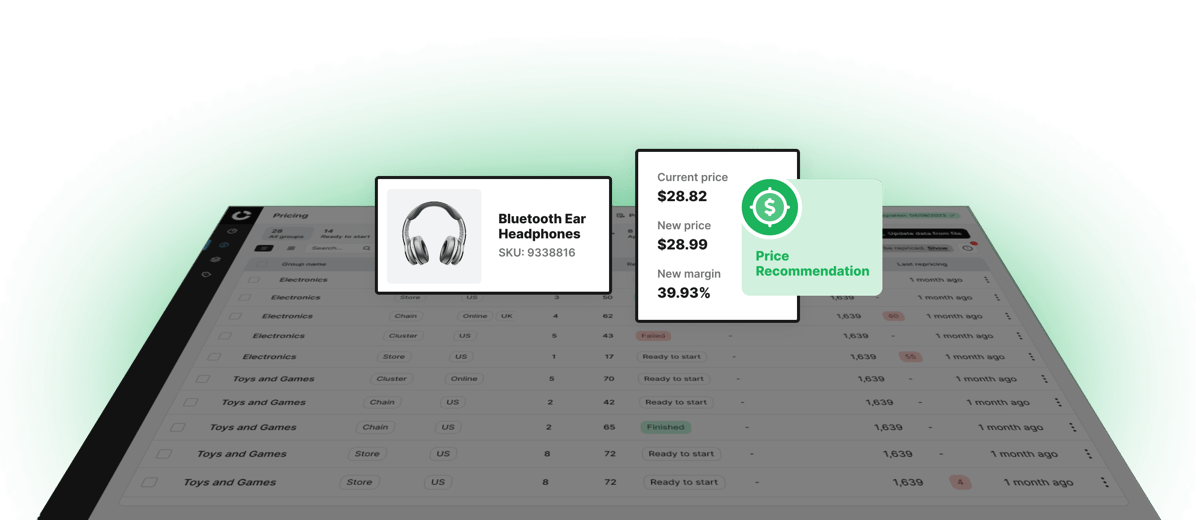


Competera Pricing Platform: AI pricing software for retail
Please fill out the form to watch video
Loading form...
Product Tour
Trusted by 50+ organizations across the globe

Your end-to-end pricing intelligence system
HIGH-QUALITY DATA
Build a strong data foundation for retail pricing excellence and AI
DEMAND MODEL
Turn your data into demand intelligence that drives every price
PRICING SYSTEM
Manage every price through a system shaped by your commercial context
RETAIL-NATIVE UI
Run a data-science-grade pricing engine through UI built for commercial teams
click, track performance and measure impact from real-time dashboards
Select the platform edition that matches your pricing maturity
PRICE-LED OPTIMIZATION
Adaptive AI
- Go live with 3+ months of history and a price-elasticity model that isolates how price changes drive sales
- Combine business rules, margin floors, and competitive constraints in a no-code decision tree, with an AI agent that resolves rule conflicts automatically
- Add advanced segmentation, long-term forecasting, or promo optimization as add-ons, and upgrade to Contextual AI when your data and strategy are ready
DEMAND-LED OPTIMIZATION
Contextual AI
- Price based on 20+ demand factors, from elasticity of demand to inventory health and lifecycle stage
- Utilize short-term and long-term SLA-backed demand forecasting with an 85% accuracy commitment, aligned to quarterly and seasonal planning cycles
- Run demand-based pricing campaigns, what-if simulations, and live A/B tests to validate strategy changes with real data before rolling them out
Advanced retail pricing software capabilities that scale with your enterprise
Automate pricing workflows
Define your pricing logic, build reusable configurations, and deploy strategies across your entire portfolio
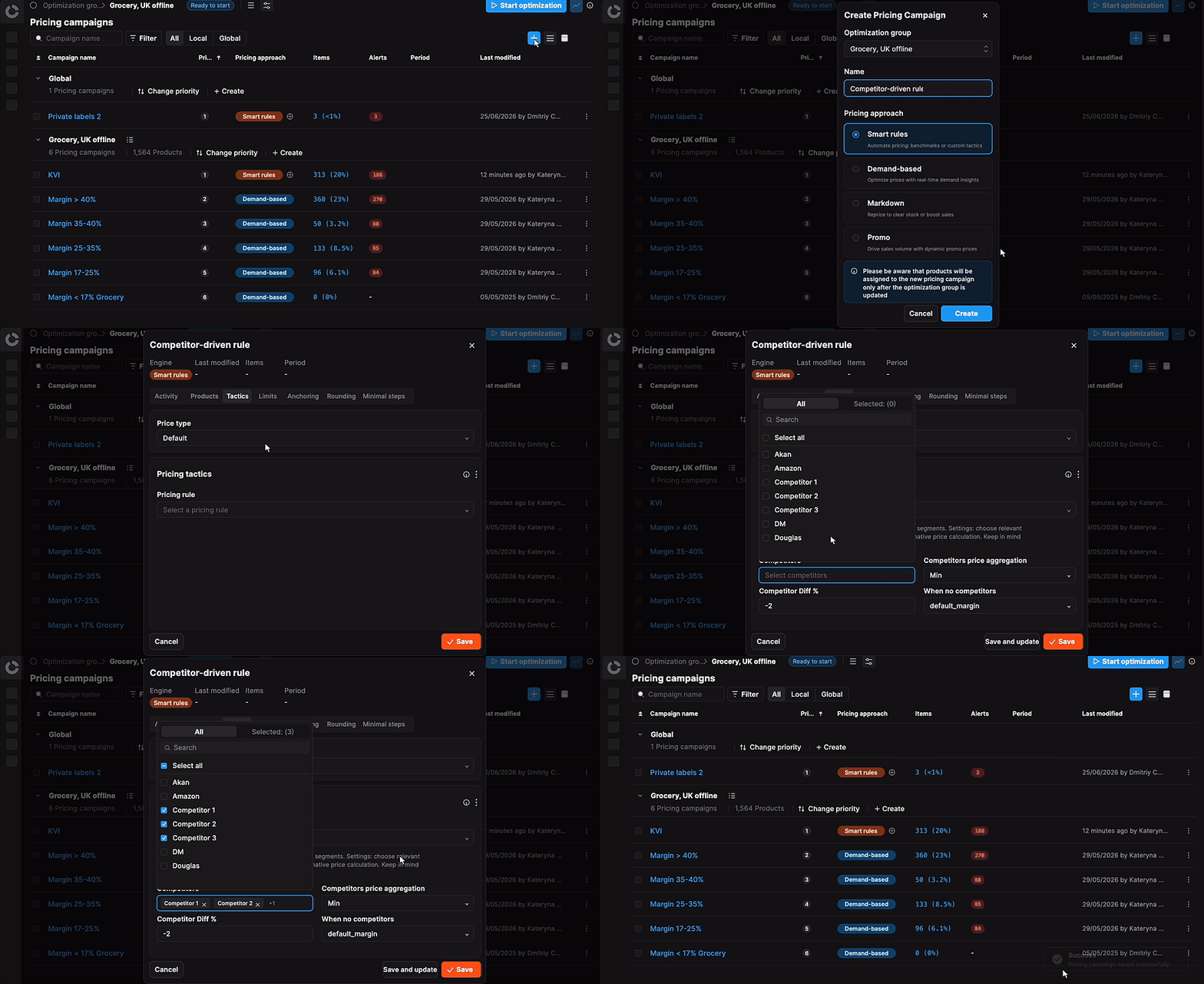
- Rule builder: Build conditional pricing logic in a no-code interface.
- Pricing campaigns management: Launch time-bound, rule-governed pricing campaigns.
- Demand-Driven Pricing Scenarios: Align strategies and campaigns to demand shifts.
- Product Segmentation: Automatically classify every SKU by various criteria.
- Anchor Management: Enforce consistent price distances across product families.
- Pricing Strategies Templates Library: Save and re-use proven pricing configurations
Use ML and AI models to price based on price elasticity and demand drivers
Turn transactional data, market signals, and demand patterns into optimal price recommendations
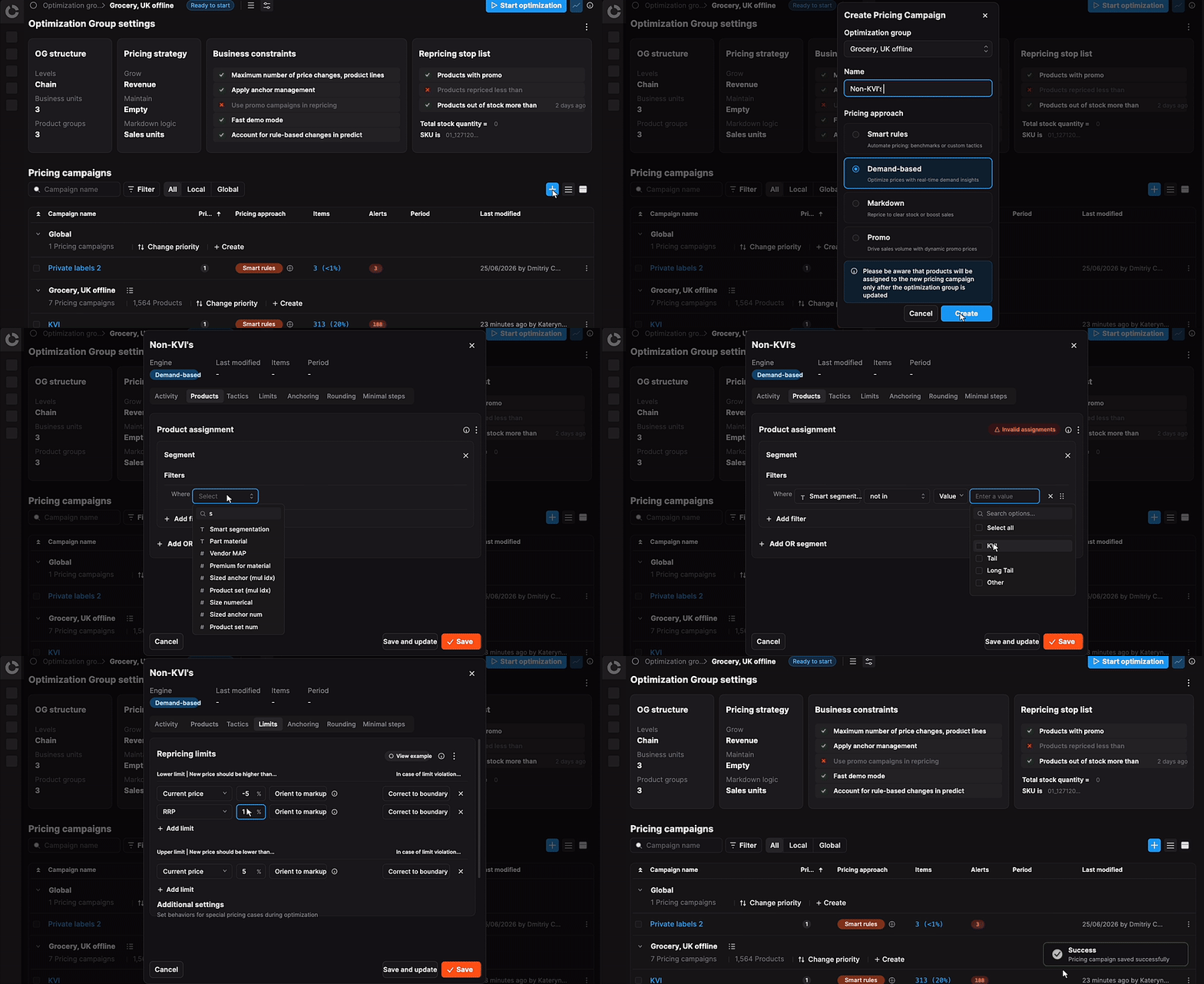
- Pricing model: Choose the pricing engine that matches your data maturity
- Contextual AI price optimization: Translate demand signals into price recommendations
- Goal management: Track pricing performance against defined business goals
- Business metrics forecast: Forecast the short-term impact of pricing changes
- Long-term demand forecasting: Project longer-horizon business outcomes
- AI Pricing Agent: Automatically optimize rules setup for high-yield pricing decisions
Optimize promo and markdown campaigns
Manage promotional and markdown campaigns in the same system that powers your regular pricing and test any strategy before it goes live
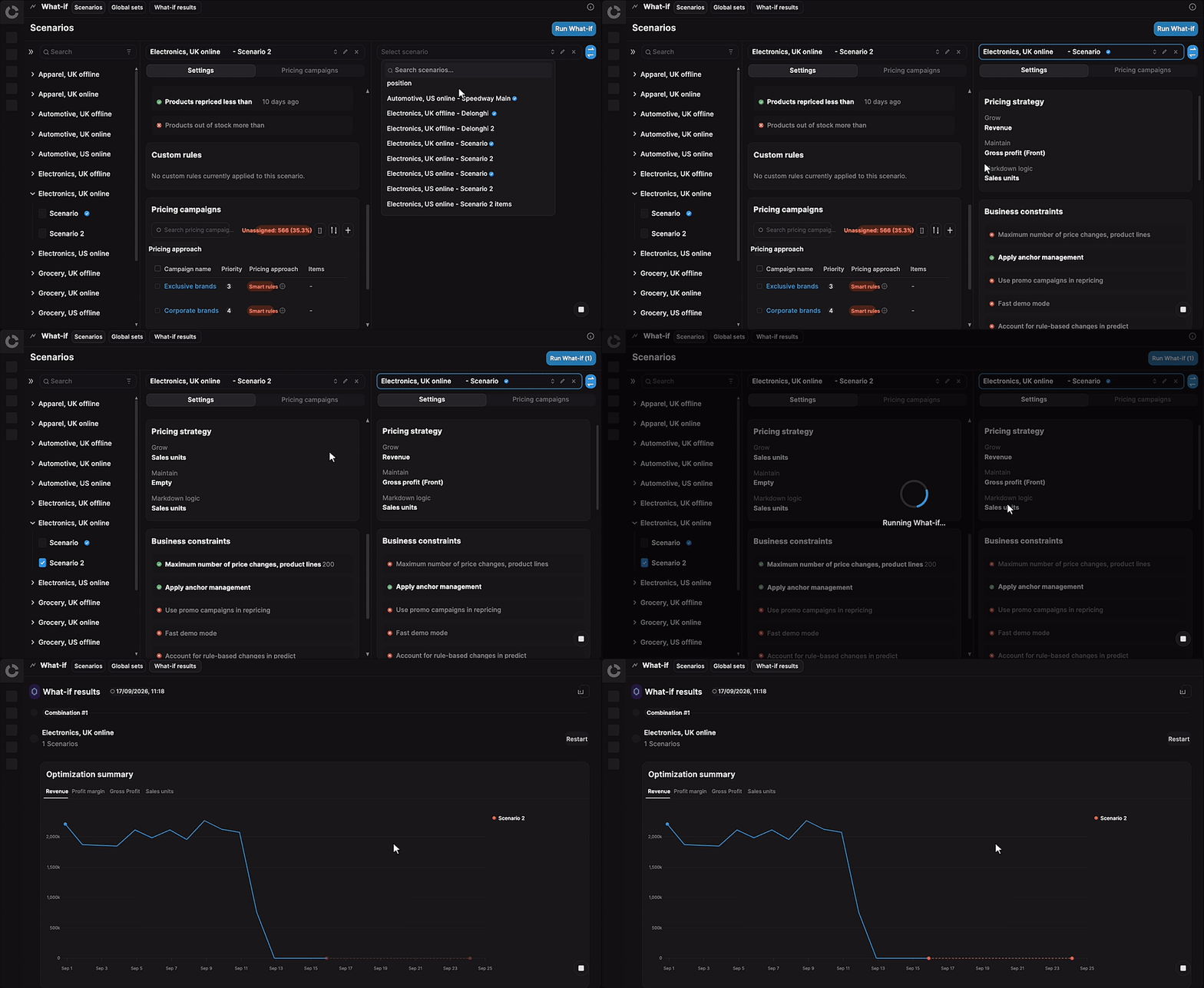
- Promo and markdown pricing optimization: Calculate optimal discount depth and timing for promo campaigns
What-If simulations: Test any combination of pricing strategy, changes, and constraints before they go live - A/B testing: Run live pricing experiments with automated product and store selection
Report on price optimization results and surface insights with AI agents
Monitor pricing performance across your portfolio, understand the demand drivers behind every recommendation, and get AI-guided navigation across the platform
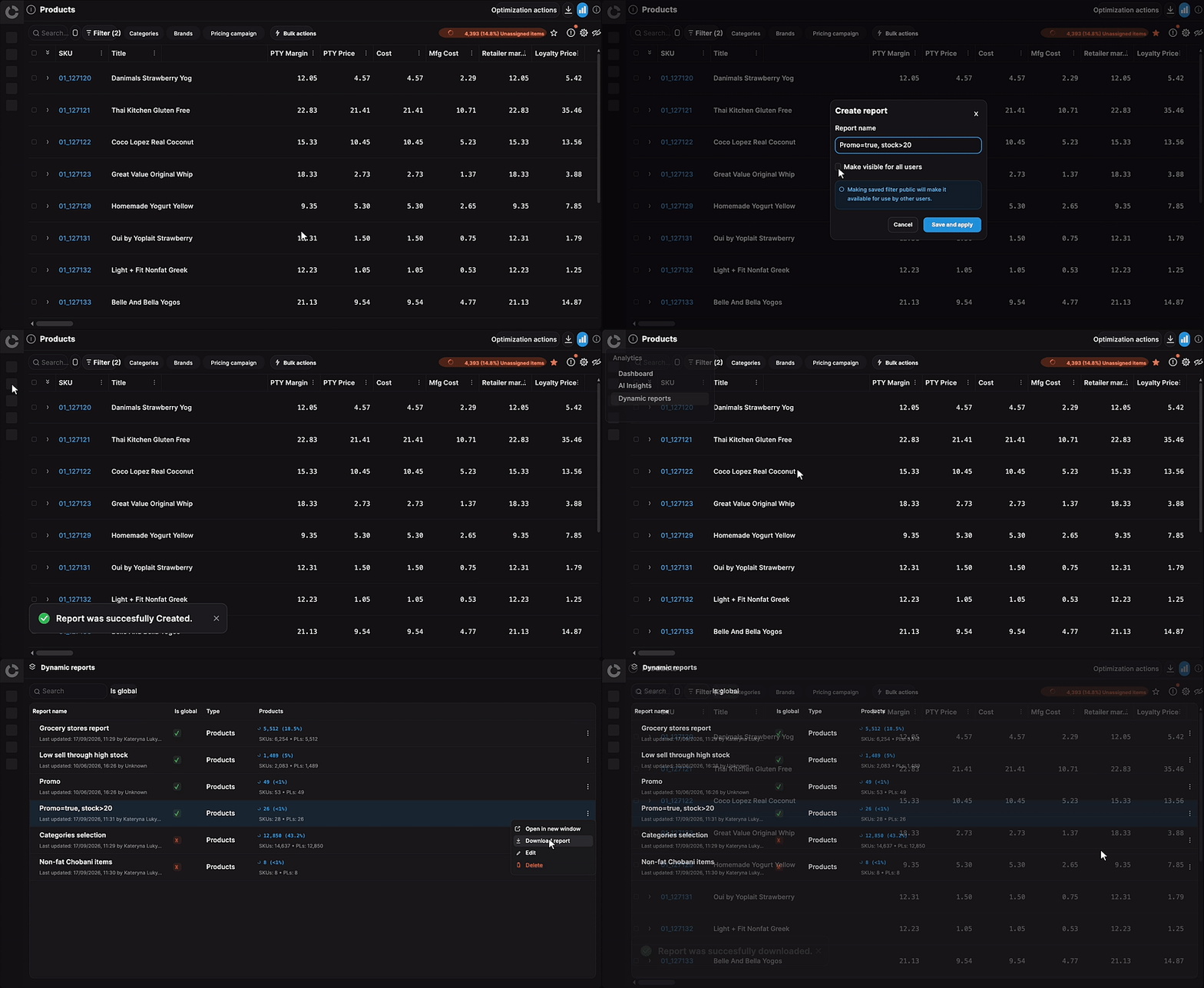
- BI dashboard and reports: Track pricing performance at any level of granularity
- Contextual analytics: Understand the demand drivers and reasoning behind each price adjustment
AI Navigation Agent: Navigate platform capabilities, surface relevant actions, and mine insights
Manage your pricing workspace
Keep your pricing operations structured, secure, and audit-ready from day one
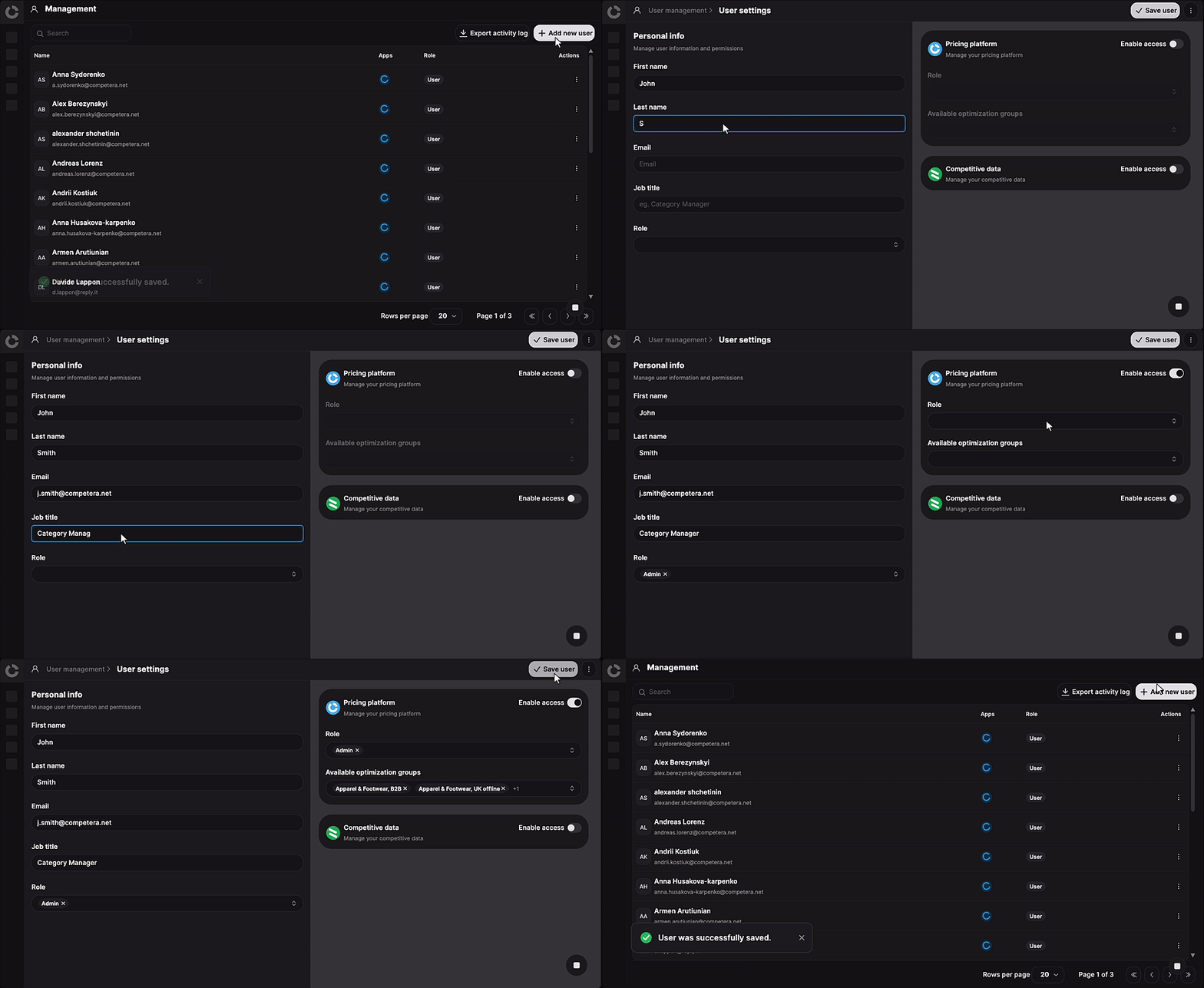
- Workspace access & governance: Centralize administration with SSO, role-based access, and a full audit trail
- Data objects builder: Onboard any internal business metric through a visual, no-code interface
- Product group management: Organize and manage pricing across geographies, categories, and business units from a single view
- Cluster and pricing zone management: Create tailored zone, cluster, and store-level combinations per channel
- Export service: Deliver pricing data to ERP, POS, or any downstream system through a configurable API
Connect Competera to your retail tech stack
Customer support that scales with your pricing operations
Basic
-
Ongoing platform stability: continuous software and UI maintenance so your pricing operations run without interruption
-
Quarterly business reviews: regular alignment sessions to review goals and ensure you're getting full value from the platform
-
Dedicated support channel: submit requests during European business hours with standard resolution timelines
Reactive
-
Faster response and resolution: first-line response within 1 hour and critical issues resolved within 24 hours
-
Pricing Success Manager: up to 12 days per year of strategic guidance and configuration support from an industry-matched pricing professional
-
Extended maintenance scope: ongoing stability coverage expands beyond the UI to include your data pipeline and models
Proactive
-
Priority response and resolution: first-line response within 5 minutes and critical issues resolved within 12 hours
-
Dedicated Pricing Success Manager: up to 27 days per year of hands-on strategic and configuration support
-
85% forecast-accuracy commitment: the only package that guarantees model performance, making it the natural companion to Contextual AI
Inspiring success stories from companies like yours
What pricing leaders say about Competera
Kamila Lisewska
Margin & Pricing Analyst
Corina Manea
VP Commercial
Dmytro Moskvichov
Director of Sales Promotion Department
Build a pricing function that grows with your business

Resources for enterprise retail pricing teams
Explore guides, reports, and expert insights on retail pricing strategy, AI-driven optimization, and pricing maturity.
The Ins and Outs of Dynamic Pricing Optimization in Retail
Get a guide on dynamic pricing strategy, including benefits and optimization. Understand dynamic pricing strategies, its benefits, and how to optimize prices!
Retail demand forecasting: methods, challenges, and how AI improves accuracy
Retail demand forecasting predicts future customer demand to guide pricing, inventory, and promotion decisions. Learn more.

Competition-Based Pricing
Competition-based pricing sets prices relative to competitors. Here's how it works, the three main types, retail examples, and when to use it.
Value-based pricing in retail: what it is and how to implement it
Understand how value-based pricing helps businesses set optimal prices based on perceived customer value.
Automated pricing optimization: how enterprise retailers move beyond manual repricing
Automated pricing optimization replaces manual repricing with AI-driven decisions at scale. Here's how it works and what separates rules-based from AI-driven automation.
Omnichannel pricing strategy: how enterprise retailers price consistently across every channel
Omnichannel pricing strategy helps retailers set consistent, channel-specific prices at scale. Here's how it works and where most retailers go wrong.
FAQ about retail pricing software
Why can’t enterprise retailers afford to get pricing wrong?
Pricing is the single largest lever for margin improvement in retail. A pricing decision that ignores demand signals, competitive context, or cross-product effects compounds across thousands of SKUs, hundreds of stores, and every selling day. The result is margin erosion that is difficult to recover: overpriced products lose volume, underpriced products leave money on the table, and poorly timed promotions train customers to wait for discounts. For enterprise retailers managing millions of price points, even a 1% pricing error at portfolio scale translates into significant lost revenue and profit.
What does retail pricing optimization software do?
Retail pricing optimization software replaces manual, spreadsheet-driven repricing with a systematic, data-informed approach to setting and adjusting prices across an entire product portfolio. At its core, it ingests transaction data, competitive intelligence, and market signals, then applies statistical or AI models to recommend prices that balance revenue, margin, and volume goals. Modern platforms go beyond simple rule execution: they model demand elasticity, account for cross-product effects and cannibalization, automate promotional and markdown pricing, and provide scenario-testing tools so pricing teams can evaluate the impact of strategy changes before they go live. The goal is to help retailers move from reactive, intuition-based pricing to proactive, demand-driven optimization at scale.
How is AI-driven pricing different from rule-based retail pricing systems?
Rule-based pricing systems execute predefined logic: if a competitor drops their price by 5%, match it; if margin falls below a floor, raise the price. These rules are fast to deploy but commercially blind. They fire without understanding why demand is shifting or how one price change affects sales of related products.
AI-driven pricing adds a demand intelligence layer on top of rules. Instead of reacting to a single trigger, an AI pricing engine models how multiple factors, such as price elasticity, seasonality, inventory levels, competitor moves, and product lifecycle stage, drive customer demand simultaneously. This means recommendations are optimized for the outcome you care about (revenue, margin, volume), not just compliant with a static rule. The difference is the shift from “follow the rule” to “achieve the goal,” with the AI continuously learning from new data to refine its recommendations over time.
What pricing challenges does Competera software solve?
Competera addresses four core pricing challenges that enterprise retailers face at scale.
First, pricing that is disconnected from customer behavior. Most pricing teams rely on rules and competitive benchmarks that ignore how customers actually respond to price changes. Competera’s demand models read 20+ factors to connect every price recommendation to real purchasing behavior.
Second, margin erosion from promotions and discounts. Without demand context, promotional pricing often goes deeper than necessary, training customers to wait for sales and compressing margins. Competera’s promo and markdown optimization calculates the right discount depth and timing based on demand signals, not guesswork.
Third, price inconsistency across channels and regions. Managing pricing across geographies, store clusters, and channels with spreadsheets leads to conflicting prices and eroded trust. Competera’s cluster and pricing zone management enforces consistent, locally relevant pricing from a single workspace.
Fourth, staying competitive without sacrificing profitability. Retailers often face a false tradeoff between competitive pricing and healthy margins. Competera’s AI engine finds the price point that protects margin while maintaining competitive positioning, accounting for cross-product effects and portfolio-level impact.
How does Competera’s retail pricing software work?
Competera Pricing Platform ships in two editions, each built on a different AI engine matched to a different stage of pricing maturity. Both share the same workspace, data foundation, and pricing architecture, so retailers can start with one and upgrade to the other without migrating data or rebuilding configurations.
With Adaptive AI, the platform ingests as little as 3 months of sales transaction history and trains a statistical price-elasticity model that isolates how price changes drive sales. Pricing teams then build strategies using a visual, no-code rule builder, with smart segmentation automatically classifying every SKU by commercial contribution, velocity, and inventory health. This edition is built for retailers that need fast, rule-governed repricing across their portfolio with minimal data requirements.
With Contextual AI, the platform trains a neural-network engine on 24 months of historical data, reading 20+ demand-driving factors simultaneously, including elasticity of demand, seasonality, inventory health, competitor moves, and product lifecycle. Instead of forecasting what happens when you change a price, it recommends the optimal price for every SKU based on the full demand context, backed by an 85% forecast-accuracy commitment. Pricing teams gain access to demand-driven scenarios, what-if simulations, and live A/B testing to validate recommendations before rollout.
In both editions, the platform continuously retrains on new data, so recommendations improve as more transaction history accumulates.
How does Competera’s Contextual AI outperform standard pricing tools?
Most standard pricing tools operate on a single signal: they model price elasticity in isolation or execute static rules without understanding what actually drives customer demand. Competera takes a fundamentally different approach across both of its platform editions.
Adaptive AI already goes beyond standard tools by combining a price-elasticity engine with smart product segmentation and an AI agent that resolves rule conflicts. It delivers portfolio-wide repricing with just 3 months of history, giving retailers a faster, more intelligent alternative to rule-only platforms.
Contextual AI builds on that foundation with a neural-network engine that models 20+ demand-driving factors simultaneously, including elasticity of demand, seasonality, inventory health, competitor pricing, and cross-product cannibalization. Rather than forecasting what happens if you change a price, it recommends the optimal price for every SKU based on the full demand context, backed by an 85% forecast-accuracy commitment. Contextual AI also adds demand-driven scenarios, what-if simulations, and live A/B testing, capabilities that standard tools do not offer.
The key difference is that Competera does not force a choice between “basic and fast” or “advanced and complex.” Retailers start with the edition that matches their data readiness and pricing maturity today, and grow into deeper demand intelligence when they are ready, without switching vendors or rebuilding their data foundation.
What key use cases does Competera Pricing Platform cover?
What retail pricing systems does Competera integrate with?
How long does it take to implement Competera’s retail pricing software?
Implementation timelines depend on the edition and deployment model. Adaptive AI, which requires just 3 months of transaction history, has a shorter data integration phase and can reach go-live faster. Contextual AI requires 24 months of historical data, which extends the data preparation and model training stages.
Competera offers two deployment models: Guided, where your team leads the implementation with Competera providing documentation and Q&A support, and Managed, where a system integrator runs project governance, data integration, and configuration on your behalf. Competera recommends Managed as the default path to the fastest, most reliable go-live. Both models follow the same implementation stages: change management, data integration, model activation, configuration, training and acceptance testing, go-live, and hypercare.
What results can enterprise retailers expect from retail pricing optimization software?
Please fill out the form to watch the product tour
Loading form...