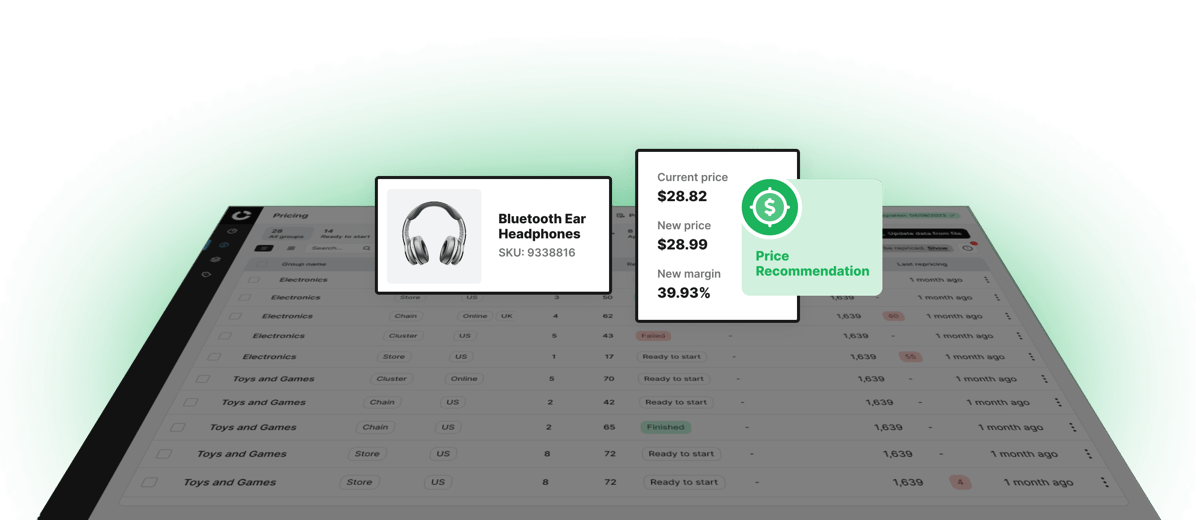




Enterprise retailers manage tens of thousands of Stock Keeping Units (SKUs) across categories, channels and geographies. Applying one pricing strategy to all of them leaks margin in every direction.
This article explains the major retail pricing strategies, when each one works and when it costs you money, then lays out a framework for combining them by product role. All retail pricing strategies with examples are drawn from grocery, consumer electronics, health and beauty, apparel and DIY.
Key takeaways
- A retail pricing strategy determines which factors drive pricing for which products, at which times and through which channels. It makes pricing consistent and defensible across tens of thousands of SKUs.
- No single strategy works across an entire assortment. Enterprise retailers combine competition-based pricing on KVIs, value-based on own-brand, dynamic on seasonal stock and cost-based floors on long-tail.
- Strategy sets the goal and the rules. Pricing tactics are the specific price points and discount depths that execute it.
- Every retail vertical combines multiple strategies. Grocery, consumer electronics, apparel, beauty and DIY each need a different mix.
- AI retail pricing makes portfolio-level execution possible by modeling demand elasticity, competitive positioning and cross-product effects across the full catalog.
What is a retail pricing strategy?
A retail pricing strategy is a systematic approach to setting prices across a product catalog to meet revenue, margin and competitive goals. It determines which factors drive pricing for which products, at which times and through which channels.
Strategy and pricing tactics are different things. A strategy defines the goal and the rules: maintain price parity on Key Value Items (KVIs), maximize margin on private label, use lifecycle markdowns on seasonal stock. Pricing tactics are the specific price points, discount depths and timing decisions that execute that strategy. Strategy is the framework. Tactics are the moves.
According to McKinsey research, a 1% improvement in pricing leads to an 8.7% increase in operating profits. At 50,000+ SKUs, pricing without a defined strategy creates inconsistency, erodes price perception and leaks margin across categories. A defined retail pricing strategy makes pricing scalable and defensible.
The major retail pricing strategies
These retail pricing models are the building blocks enterprise retailers combine across their assortment. Each serves a specific purpose and each fails when applied to the wrong category or competitive context. The right approach depends on the product's role, its competitive exposure and the margin it needs to deliver.
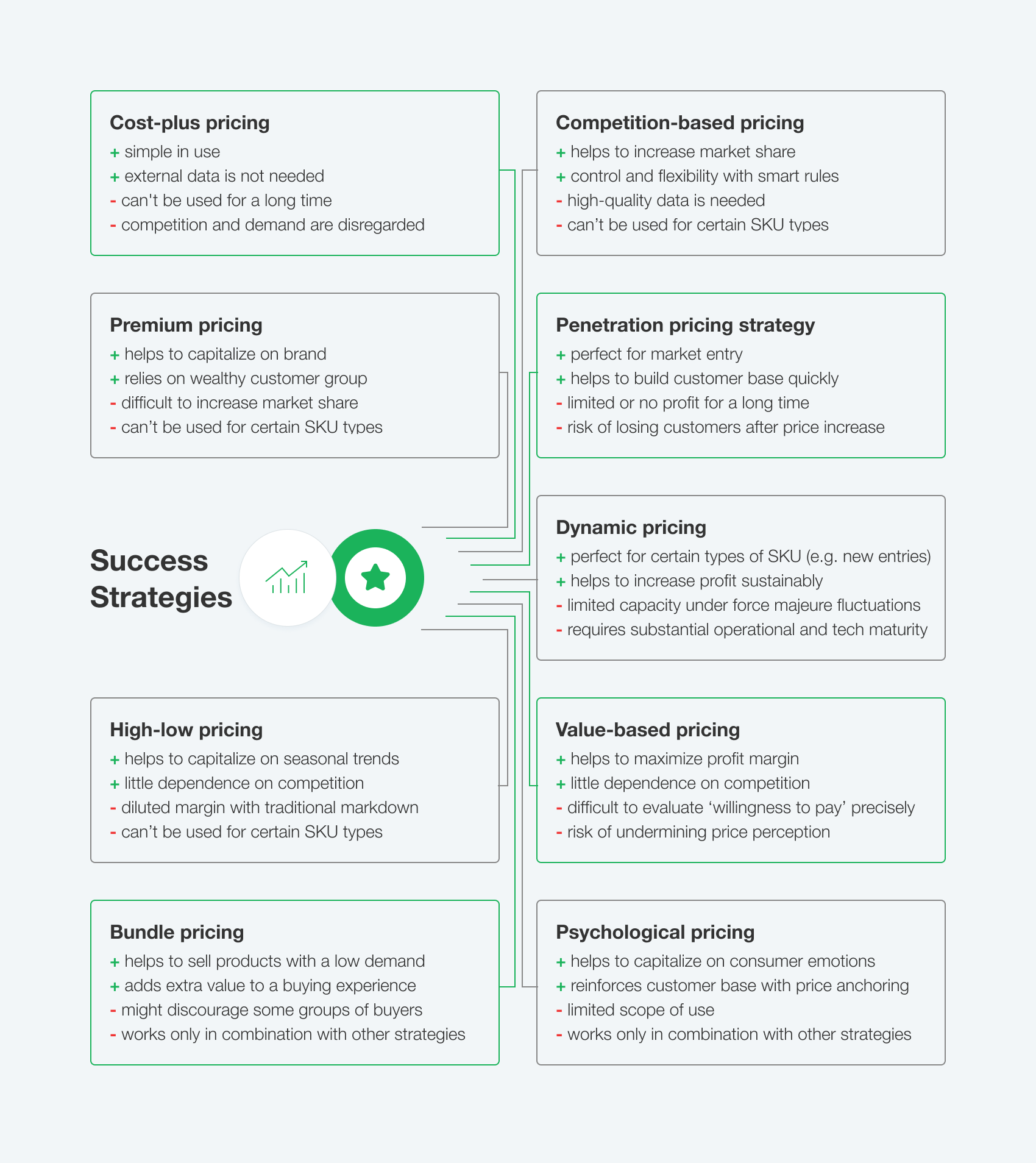 Cost-plus pricing
Selling Price = Cost × (1 + Markup%)
Cost-plus pricing adds a fixed markup to the product cost. A product that costs $10 gets priced at $13 with a 30% markup. You get a guaranteed minimum margin on every unit.
Cost-plus works as a floor for stable, low-complexity categories. It breaks down wherever willingness to pay varies by product, competitor pricing shifts frequently or a flat markup leaves money on the table.
Competition-based pricing
Price = Base Price + Market Factor + Premium Factor
Competition-based pricing sets your prices relative to competitors. You price at, below or above the market depending on your positioning. The market factor reflects competitive data. The premium factor applies when you charge more for exclusive services or differentiation. Reliable competitive pricing analysis is what makes this work rather than guesswork.
Competitive pricing fits price-sensitive categories where customers actively compare across retailers, particularly national brands and commodity products. Blindly matching competitors is the most common failure. You need to know which SKUs require parity and which ones you can price independently.
Dynamic pricing
Revenue = P × d(p)
Where P is the price and d(p) is the demand function.
A dynamic pricing strategy adjusts prices based on real-time demand, inventory, competitive shifts and other signals. A dynamic pricing algorithm extends the basic formula by processing dozens of additional factors: procurement costs, inventory levels, cannibalization effects, competitor activity and promotional calendars.
Dynamic pricing suits volatile demand and time-sensitive inventory. Consumer electronics and fashion clearance are common applications. Customer backlash is the main concern if changes feel arbitrary, which is why price perception guardrails are critical.
Value-based pricing
True Economic Value (TEV) = Cost of Closest Alternative + Differentiating Value
Value-based pricing sets prices based on what customers will pay for specific benefits, not what the product costs or what competitors charge. A football jersey for a player who just won an award is worth more to fans than the same jersey last month, even though the product is identical.
This is where the highest margin opportunity sits for differentiated and own-brand products. It requires price elasticity data. Without it, you are guessing what customers value.
Demand-based pricing
Grocery retailers adjusting prices on fresh produce near its sell-by date are using demand-based pricing. Prices rise when demand is high and fall when it drops, focusing specifically on the demand-volume relationship.
Demand-based pricing fits seasonal categories, perishables and products with predictable demand cycles. It differs from dynamic pricing in scope: dynamic responds to multiple signals simultaneously, demand-based focuses on the demand curve itself.
Psychological pricing
Psychological pricing in retail uses price presentation to shape how customers perceive value.
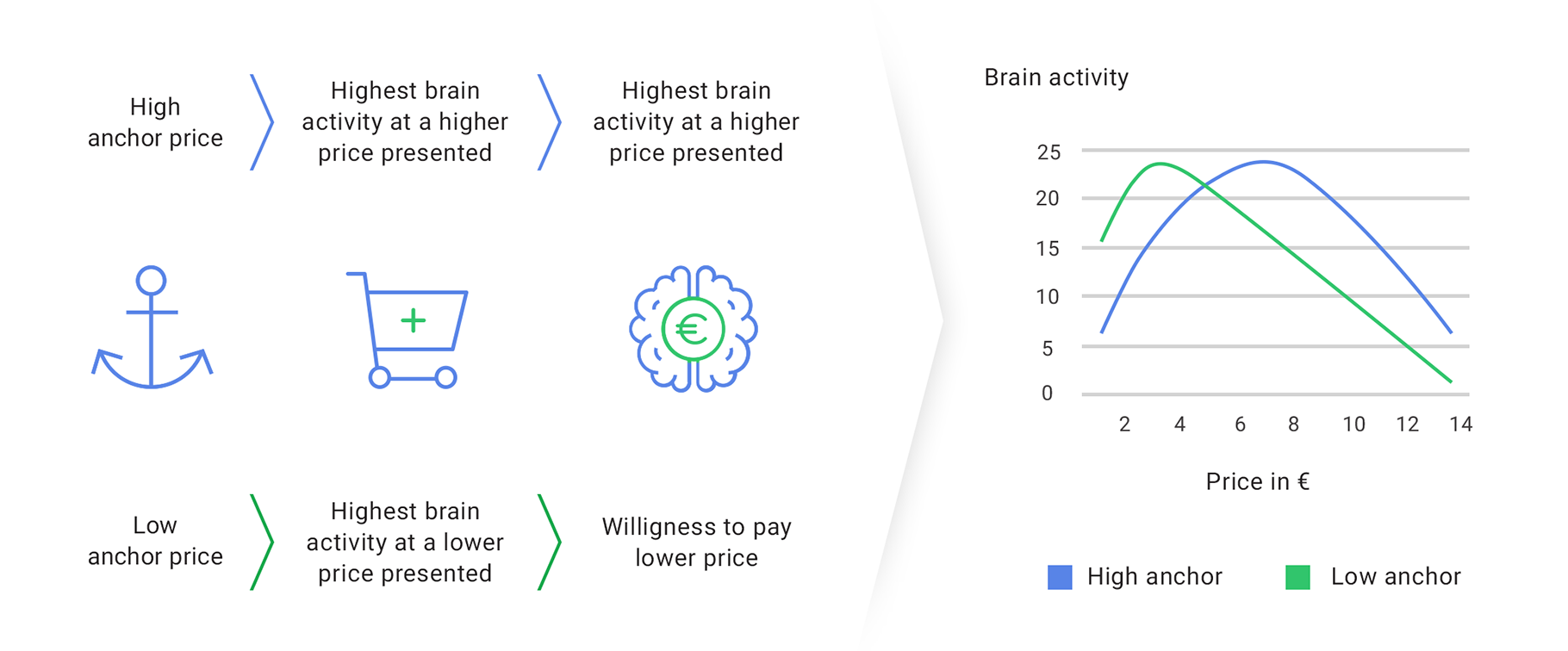
Charm pricing: $9.99 instead of $10. Anchor pricing: a higher "original" price next to the sale price. Prestige pricing: round numbers ($200, not $199.99) to signal quality. Price lining: an expensive item placed next to an even more expensive one.
Psychological pricing is rarely standalone. It layers on top of competition-based or value-based pricing, with rounding, anchoring and framing applied to the final price points.
 Penetration pricing
Penetration pricing sets a low initial price to attract volume, build customer base and discourage competitors. You accept lower margin upfront for faster market share growth.
It fits new product launches, new channel entry and low-switching-cost categories. The danger is that customers anchor to the introductory price. Without a defined transition plan to everyday pricing, raising prices later costs you volume. Build the exit plan before you launch.
Price skimming
New consumer electronics launches use price skimming constantly. A device enters at a premium targeting early adopters, holds that price while first-wave demand is strong, then drops as competitors appear or the next generation is announced.
Price skimming is the inverse of penetration pricing. It works when a product has genuine novelty, scarcity or differentiation at launch. Understanding pricing strategies by product life cycle helps the team know when to reduce and what each lifecycle stage requires.
Loss leader pricing
Milk, bread, eggs. Grocery retailers price these at or below cost to drive store traffic. Loss leader pricing bets that customers coming in for the loss leader will fill their basket with higher-margin products.
It fails when the loss leader cannibalizes higher-margin alternatives without lifting total basket value. KVI pricing analysis identifies which products actually drive traffic versus which ones just give away margin.
Bundle pricing
Bundle pricing combines multiple products at a lower total price than the items separately. Tool kits in DIY, skincare sets in beauty, accessory bundles in electronics and multi-buy offers in grocery are all examples.
It increases basket size, moves slow inventory alongside popular products and creates a perception of value. Poorly designed bundles erode margin when they pair high-margin with low-margin products without calculating the net category effect. Every bundle needs a margin calculation, not just a revenue target.
Promotional pricing
Promotional pricing uses temporary reductions, flash sales, buy-one-get-one offers or coupons to drive short-term volume. A discount pricing strategy like this is among the most common pricing tactics in retail and the one that gets misused most often.
It works with discipline: defined objectives, measured incrementality and guardrails on frequency and depth. It becomes a liability when promotions run too often, training customers to wait for the sale. Tiered loyalty pricing and subscribe-and-save models are emerging as alternatives that deliver ongoing value without repeated markdowns.
How to choose the right retail pricing strategy for each part of your assortment
Enterprise retailers do not pick one pricing strategy for the full catalog. They combine retail pricing strategies by product segment based on each product's role, competitive exposure and margin contribution. The framework below maps five assortment segments to the pricing approach that fits each one.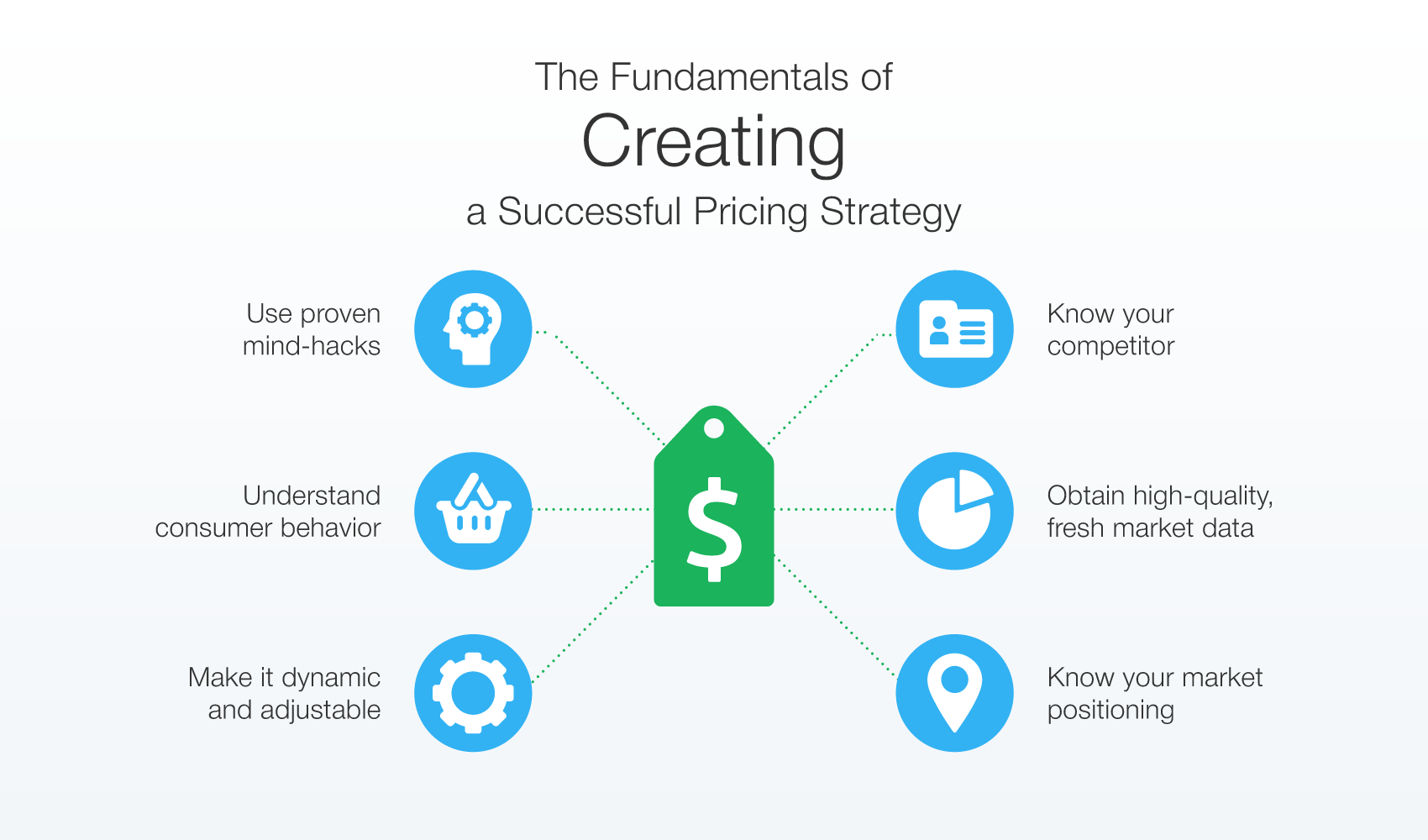
KVIs and traffic-driving SKUs: competition-based pricing as the baseline
KVIs are the products customers use to judge your price image. For these SKUs, competitive pricing is the baseline. The goal is to maintain a defined position relative to key competitors, because KVI prices drive traffic and shape how customers perceive everything else you sell. Margin is protected on the rest of the assortment.
Own-brand and differentiated SKUs: value-based pricing anchored to elasticity
Private label and exclusive products have no direct competitor equivalent. There is no market price to match. Value-based pricing informed by demand elasticity modeling determines what customers will pay for the specific benefits these products deliver. This is where margin opportunity is highest and where pricing decisions require the most analytical depth.
Seasonal and clearance SKUs: dynamic pricing with markdown guardrails
End-of-season and end-of-life products need pricing that responds to sell-through velocity and remaining inventory. Dynamic pricing software automates markdown decisions based on demand signals, competitive context and margin floors. Guardrails prevent over-discounting that damages price perception on the broader assortment.
New product launches: penetration pricing into value-based
New products without demand history need a launch strategy. Penetration pricing builds trial and volume. Once transaction data accumulates, the product transitions to value-based pricing informed by actual elasticity. Move too early and you lose volume. Move too late and customers anchor to the low price.
Long-tail and slow-moving SKUs: cost-based floors with competitive ceilings
Long-tail SKUs do not justify the analytical investment of value-based or dynamic pricing. Cost-plus provides a margin floor. Competitive data provides a ceiling. Together they create a pricing band that protects margin without granular modeling for products that account for a small share of total revenue.
Retail pricing strategy examples by vertical
Every retail vertical combines multiple retail pricing models. The mix depends on margin structure, competitive intensity, product lifecycles and customer price sensitivity. These five verticals show retail pricing strategies with examples of how they come together in practice.
Grocery: EDLP anchored by KVI competition-based pricing
Thin margins and high KVI sensitivity. Everyday-low-price retailers anchor on competition-based pricing for traffic-driving staples. Private label uses cost-plus floors with value-based adjustments where elasticity supports a premium. Promotional pricing covers seasonal and vendor-funded campaigns. Loss leader pricing on select products drives footfall.
Consumer electronics: price skimming into competition-based, with dynamic markdown
Product lifecycles drive everything. New launches use price skimming for early-adopter margin. As competitors appear, pricing shifts to competition-based. End-of-life stock enters dynamic markdown. Accessories use bundle pricing. Psychological pricing layers across the catalog.
Health and beauty: value-based own-brand, competition-based national brands
National brands are heavily comparison-shopped, making competition-based pricing the default. Own-brand and exclusive ranges use value-based pricing because customers cannot compare them across retailers. Promotional pricing drives seasonal events, gift sets and launches. Bundle pricing on skincare regimens builds basket size.
Apparel: lifecycle pricing with psychological layering
Compressed seasonal lifecycles. Full-price periods use value-based pricing for differentiated styles and competition-based pricing for basics. Dynamic markdown manages sell-through as the season progresses. Psychological pricing is standard: $49.99 rather than $50, with anchor pricing showing the original next to the markdown.
Home furnishings and DIY: bundle pricing with cost-plus floors on long-tail
Very large long-tail assortments where cost-plus pricing provides the margin baseline. High-visibility categories like power tools and flooring use competition-based pricing. Bundle pricing is core: tool kits, project packs and accessory sets increase basket value. Seasonal demand spikes use demand-based pricing adjustments.
The role of AI pricing and real-time competitive intelligence in retail strategy
Assigning the right strategy to each product segment is a portfolio-level decision. Executing those strategies across tens of thousands of SKUs, updating them as conditions shift and measuring performance at category level is where manual processes break down.
AI retail pricing automates strategy execution at scale. AI-driven platforms model demand elasticity, competitive positioning and cross-product effects to generate price recommendations aligned with each product's assigned strategy.
Competera Pricing Platform applies Contextual AI to model 20+ pricing and non-pricing factors across the full assortment. Pricing teams assign strategies by product segment and the platform generates optimized prices that reflect each segment's rules, constraints and objectives. The "what-if" simulation lets you test how changes would affect revenue, margin and price perception before committing. You stay in control. The platform handles the scale.
For real-time competitive intelligence, Competera Competitive Data delivers market-level pricing data with a 98% delivery SLA across identical and similar product matches.
Explore how Competera supports retail pricing strategy execution in the AI pricing guide.
Talk to an expert to see how these strategies apply across your assortment.

.webp)